
Behind the Scenes of Hollywood: The Biggest Challenges Faced During the Filming of Major Productions
Behind the Scenes: The Biggest Challenges in Major Movie Productions
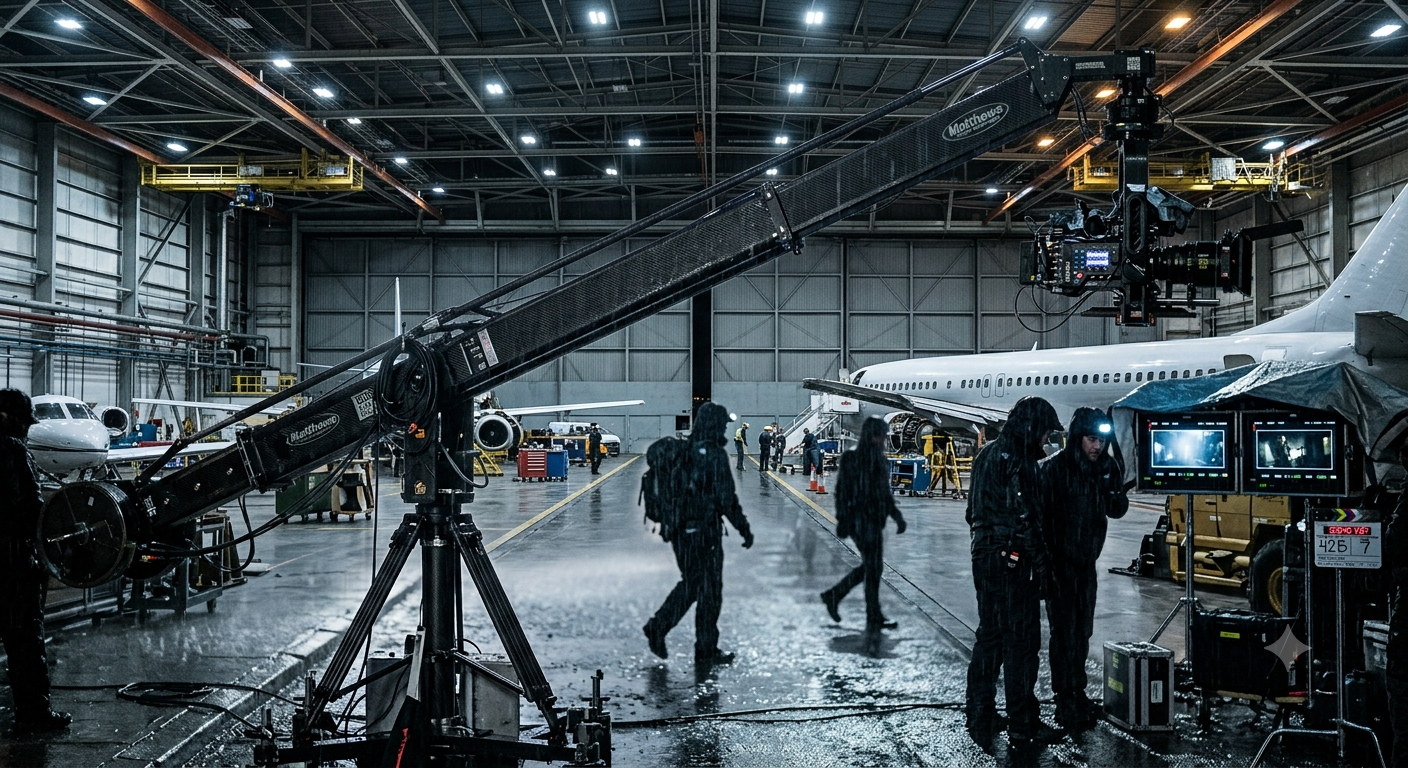
When we sit down in a movie theater seat or turn on the TV to watch a massive blockbuster, we are instantly transported to fantastic worlds, epic battles, or intense dramas. The perfection of the images, the powerful soundtrack, and the flawless performances of the actors make us forget that behind that two-hour piece of art lie months—and sometimes years—of monumental effort, often marked by chaos, extreme stress, and obstacles that almost ruined the entire project.
The average viewer sees the glamour of the red carpet but rarely grasps the industrial complexity involved in a big-budget film. Budgets exceeding hundreds of millions of dollars are no guarantee of a smooth process. On the contrary: the larger the operation, the greater the potential for colossal failures.
In this article, we will dive deep into the backstage world of global cinema and television to understand the greatest challenges faced during the shooting of major productions, revealing how directors, producers, and crew members pull off daily miracles to transform raw chaos into cinematic magic.
The Dark Side of Blockbusters: When Money Can’t Fix Everything
A common misconception in pop culture is that a robust budget shields a production from unexpected mishaps. In reality, the financial pressure of a massive film acts as an amplifier for problems. If an independent shoot is delayed by a day due to heavy rain, the financial loss can be measured in thousands of dollars. However, on a blockbuster set with thousands of extras, state-of-the-art rented equipment, and Hollywood stars with down-to-the-minute schedules, a single lost day can easily cost well over a million dollars.
Coordinating a crew that frequently exceeds a thousand professionals at any given time requires military precision. When a single gear in this massive machine fails, the ripple effect disrupts the entire production chain. Below, we detail the critical factors that constantly test the physical and mental limits of filmmakers.
1. The Wrath of Nature: Unpredictable Weather and Extreme Locations
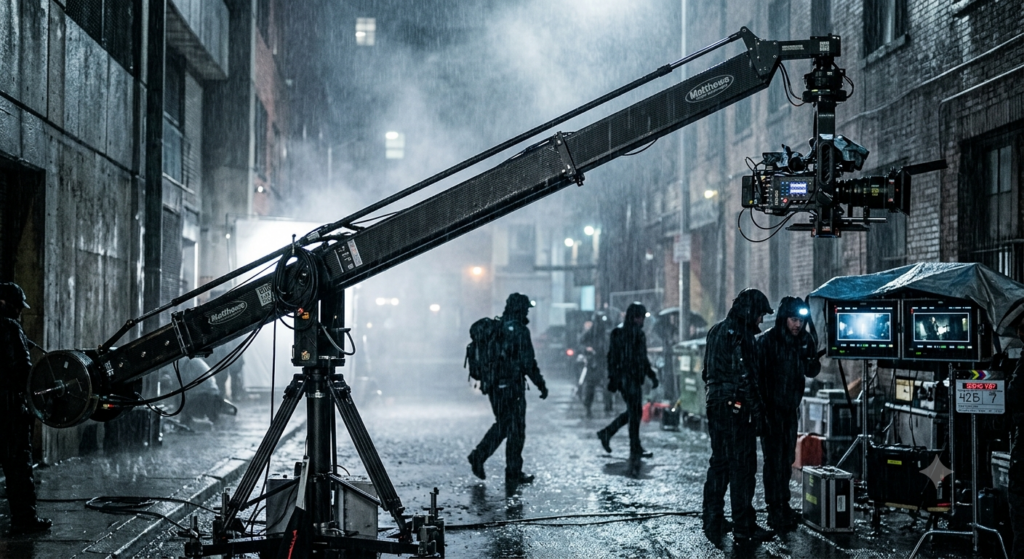
One of the greatest enemies of any cinematographer or location manager is the weather. The script might call for a radiant, sun-drenched day, but nature might deliver consecutive weeks of torrential downpours. When productions choose to abandon the comfort of green-screen studios to pursue the raw realism of extreme real-world locations, the difficulty level skyrockets.
The movie The Revenant (2015), directed by Alejandro G. Iñárritu, is a textbook example of this challenge. The director insisted on shooting using only natural light and in real, freezing locations across Canada and Argentina. The crew and cast faced brutal temperatures dropping below -30°C. The extreme cold not only battered the bodies of the crew but also froze the internal electronics of the cameras, drained batteries in minutes, and severely restricted the viable shooting hours per day.
Another iconic case is Mad Max: Fury Road (2015). The production originally planned to shoot in the Australian desert, but unprecedented rainfall transformed the barren landscape into a lush field of wildflowers. The solution? Shipping hundreds of heavily modified vehicles, tons of equipment, and the entire crew to the Namib Desert in Namibia, Africa. Adapting the entire logistical operation to a completely different continent at the last minute caused immeasurable human and financial strain.
2. A Logistical Nightmare: Moving Entire Cities of Production
Managing the logistics of a major production is akin to running a small, constantly moving city. It is not just about transporting cameras and actors; it involves catering for hundreds of people three times a day, mobile restrooms, security teams to lock down urban perimeters, hotel accommodations, and securing highly complex government permits.
Consider the filming of The Lord of the Rings trilogy or the hit series Game of Thrones. Filming took place simultaneously across multiple countries and distant regions. On Game of Thrones, while one unit shot scenes under the scorching sun of Croatia or Morocco, another unit was knee-deep in the blizzards of Iceland or the mud of Northern Ireland.
Ensuring that the correct costumes arrived in the right country, that stunt doubles were trained on time, and that communication between the main director and the “second units” remained flawless was one of the greatest logistical triumphs in entertainment history. A simple shipping error for a specific costume piece could paralyze the filming of an entire storyline.
3. Creative Clashes and Ego Warfare Behind the Scenes
Cinema is fundamentally a collaborative art form. However, when many brilliant, strong-willed, and highly valued minds gather under immense pressure, conflict becomes inevitable. Creative friction can occur between the director and the studio, the director and the screenwriter, or directly between the lead actors.
Historically, many classics were born from deeply hostile sets. During the filming of The Shining (1980), director Stanley Kubrick pushed actress Shelley Duvall to her absolute emotional limit, demanding over a hundred retakes of the same scene to extract a reaction of pure, authentic terror. The stress was so severe that the actress actually began losing clumps of hair during production.
There are also clashes of vision between directors (who seek artistic purity) and studio executives (who focus on commercial return and age ratings). Sudden script rewrites ordered from the top down in the middle of production often spark widespread frustration, demotivate the crew, and cause severe delays in continuity, leading to incredibly expensive and exhausting reshoots.
4. Practical Special Effects and Catastrophic Mechanical Failures
While computer-generated imagery (CGI) has dominated the industry over the last few decades, many renowned directors, such as Christopher Nolan and Tom Cruise, still prioritize practical effects to bring a greater sense of danger and realism to the screen. Building mechanical sets and using animatronics yield breathtaking visual results, but they carry immense technical risks.
In 1975, a young Steven Spielberg almost saw his career implode during the shooting of Jaws. The mechanical shark built for the film, affectionately nicknamed “Bruce,” worked perfectly during freshwater tests in the studio tanks. However, the moment it was submerged in the saltwater of the Atlantic Ocean, its internal mechanics corroded immediately, the circuits short-circuited, and the creature sank to the bottom.
Spielberg was forced to rewrite the script on the fly, deciding to merely suggest the shark’s terrifying presence through first-person camera angles and John Williams’ iconic musical score. This transformed a catastrophic technical failure into one of the greatest strokes of suspense-filmmaking genius in history.
Traditional vs. Modern Production Environments:
[Traditional On-Location Set] -> Susceptible to mechanical failures, weather issues, human delays.
[Digital Soundstages (The Volume)] -> Heavy reliance on software, real-time rendering, physical space limitations.
5. Racing Against the Clock and Managing Health Risks
The daily routine on a massive movie set is notoriously exhausting. Workdays of 14 to 16 hours are common, often stretching late into the night under freezing or blistering conditions. This relentless pace creates accumulated physical fatigue that opens the door to one of the worst-case scenarios: accidents or health crises involving the main cast.
When the lead actor suffers an injury, the entire machine grinds to a halt. While filming Mission: Impossible – Fallout (2018), Tom Cruise, famous for performing his own dangerous stunts, broke his ankle while jumping between two buildings in London. Production had to be suspended immediately for nearly two months for his recovery. Even though the studio had to keep paying essential crew members to avoid losing them, the estimated loss at the time orbited around 80 million dollars (largely covered by highly specialized Hollywood insurance policies).
Managing risk, enforcing rigid safety protocols for stunt teams, and ensuring the psychological well-being of an exhausted crew is one of the most complex and vital roles of modern executive producers.
Conclusion: The Magic of Cinema is Born from Conquered Chaos
Watching the final credits roll across the screen is witnessing the victory of an army of professionals who overcame time constraints, the elements of nature, mechanical breakdowns, and sheer physical exhaustion. Large-scale filmmaking is one of the most complex industries on earth, operating on the razor-thin edge between meticulous strategic planning and inspired artistic improvisation.
Understanding these backstage battles does not diminish the charm of the final film; instead, it enriches our experience as viewers. Knowing that a flawless scene in the snow required the heroic effort of hundreds of people fighting to keep their tools from freezing makes us appreciate every frame, every line of dialogue, and every sound effect as a triumph of human resilience over the chaos behind the scenes.
Frequently Asked Questions (FAQ)
Which movie had the most chaotic production history in cinema?
Many film historians point to Francis Ford Coppola’s Apocalypse Now (1979) as one of the most troubled shoots ever. The production in the Philippines was struck by a destructive typhoon that wiped out the sets, the lead actor (Martin Sheen) suffered a heart attack on set, the local military helicopters rented for the film were constantly recalled by the government to fight real insurgencies, and the budget spiraled out of control, forcing the director to bankroll the movie with his own money.
What happens when a lead actor gets sick or injured during filming?
Major productions carry incredibly expensive and intricate insurance policies. If an actor is injured, filming for their specific scenes is paused. The director will attempt to rearrange the shooting schedule to film secondary sequences or scenes involving other characters. If a total shutdown is required, the insurance policy helps cover the daily operational costs to keep the crew under contract until the actor returns.
Why do directors still use practical effects when CGI is so advanced?
Practical effects evoke a much more organic and realistic reaction from actors, who are interacting with real, physical objects and environments rather than performing in empty green rooms. Furthermore, real lighting, gravity, and textures interact perfectly with the camera lens—something that digital effects, no matter how advanced, can still fail to replicate flawlessly, sometimes falling into the “uncanny valley.”
How long does it take to shoot a major Hollywood blockbuster?
The principal photography phase of a major blockbuster typically lasts between 3 to 6 months. However, the entire lifecycle of the project—including script development, pre-production (building sets, scouting locations), and post-production (editing, visual effects, sound mixing)—can easily take 2 to 3 years.