
How Scenes with Hundreds of Extras Are Produced in Film
How Scenes with Hundreds of Extras Are Produced in Film.
When watching an epic battle in a historical film, a sold-out stadium concert in a musical biopic.
Or a chaotic panic scene in a disaster movie, it is hard not to be awed by the sheer scale of the crowd on screen.
Seeing hundreds—or even thousands—of people reacting in unison creates an unmatched sense of immersion and elevates the production value of any cinematic work.
However, what appears on screen as a few minutes of seamless drama is the culmination of months of painstaking planning, military-grade logistics, and cutting-edge technology.
Producing scenes with massive crowds is one of the most complex undertakings in filmmaking.
It requires coordinating hundreds of non-professional performers, ensuring strict safety standards,
Maintaining aesthetic consistency across wardrobe and makeup, and managing significant operational budgets.
While advances in visual effects (VFX) have transformed how crowd sequences are captured, the human element remains an irreplaceable foundation of cinematic storytelling.
In this article, we will go behind the scenes to reveal how crowd scenes are produced, from initial recruitment and set management to digital replication and crowd simulation software.
1. The Logistics Challenge: Massive Casting and Talent Management
Long before cameras begin rolling, the production team must solve an intricate logistical puzzle: how to recruit, select, and manage hundreds of background performers.
This monumental task falls upon background casting directors and line producers.
The casting process varies greatly depending on the project’s requirements.
For period dramas, casting is notoriously strict; modern haircuts, visible tattoos, painted nails, or artificial tans can immediately ruin historical authenticity.
For large-scale productions, casting agencies organize massive open calls where thousands of applicants are screened over just a few days.
Beyond recruitment, the legal and administrative infrastructure is immense.
Every background extra must sign image release contracts, complete payroll documentation,
And have their work hours rigorously tracked to comply with strict industry labor laws and union guidelines.
2. Organizing the Set: The Hierarchy of Assistant Directors
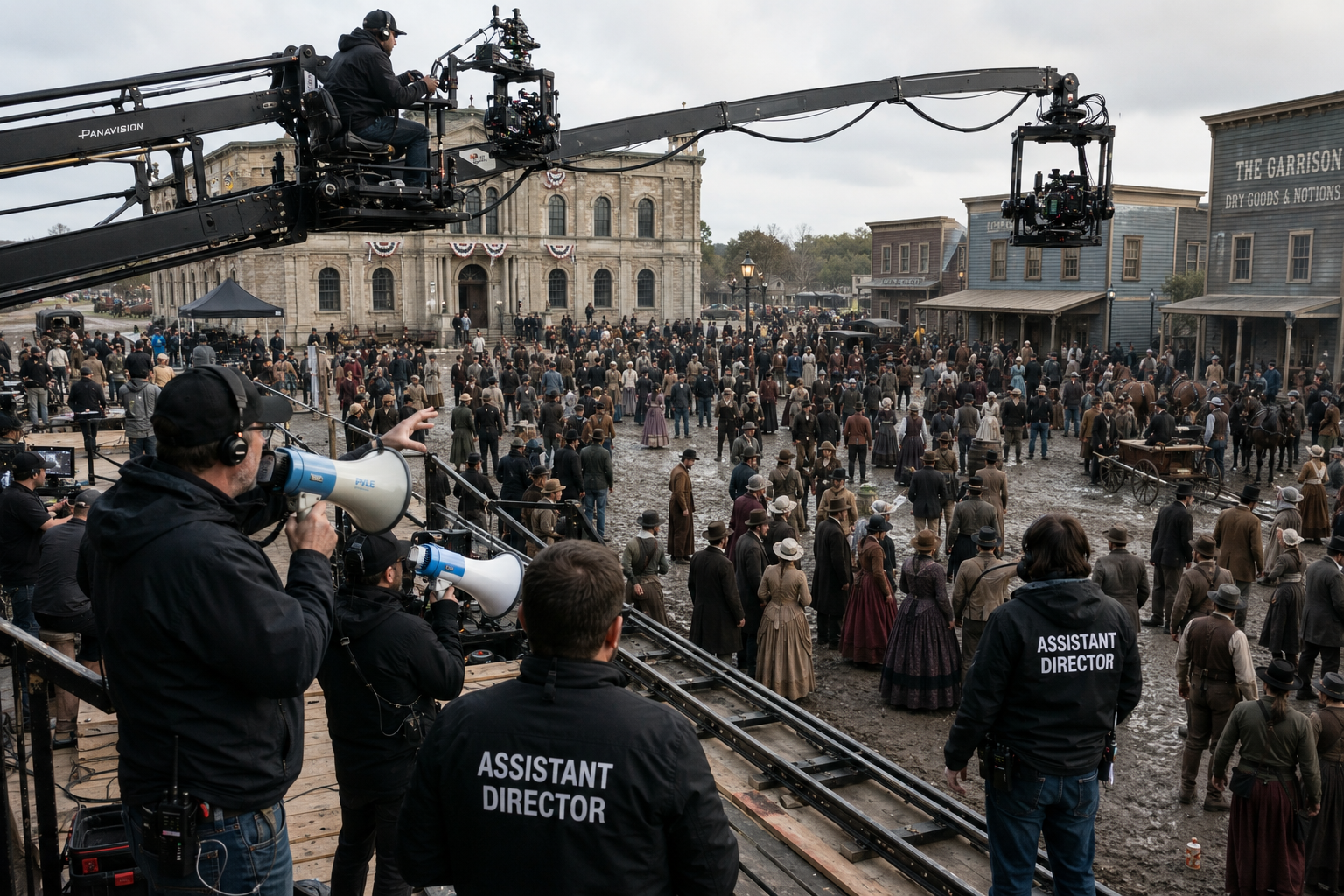
Coordinating hundreds of individuals who may have little to no prior acting experience requires a highly structured command hierarchy on set.
To prevent chaos from overwhelming the soundstage or location, the assistant director (AD) department divides responsibilities into well-defined operational tiers.
The Crucial Role of Assistant Directors
While the First Assistant Director (1st AD) oversees the overall shooting schedule and directs primary camera setups,
The Second Assistant Director (2nd AD), Key Set ADs, and Production Assistants (PAs) take direct charge of crowd control.
-
Set Sectorization: The filming area is partitioned into designated zones or quadrants identified by color codes or numbers.
-
Extra Captains: Groups of 20 to 50 extras are assigned to dedicated set assistants, often referred to as crowd leaders or group captains.
-
Mass Communication Systems: Assistant directors utilize megaphones, two-way radios, and PA speaker systems to deliver clear instructions regarding positioning, cues, and resets.
3. Large-Scale Wardrobe, Makeup, and Catering Operations
Preparing hundreds of background performers to step in front of the camera requires an infrastructure comparable to hosting a daily community event.
Operations begin hours before the main crew arrives on set.
Assembly Line Wardrobe and Makeup
The costume department establishes an efficient assembly line system.
Extras pass through designated stations where they are fitted with pre-numbered, cataloged outfits.
On fantasy or historical productions involving complex costuming, dozens of dressers work simultaneously to ensure everyone is camera-ready on time.
In the hair and makeup department, a tiered strategy is applied: extras positioned in the immediate foreground receive detailed,
Individual characterization, while background performers in the distance undergo rapid hair and makeup touch-ups to ensure visual uniformity across the crowd.
Catering and On-Set Welfare
Feeding a crowd of hundreds requires a dedicated catering team. Massive tents are erected with buffet lines serving breakfast, lunch, and craft service snacks.
Keeping background performers well-fed, hydrated, and comfortable is not only a contractual and ethical requirement,
But also essential for maintaining high morale and energy during long, repetitive shooting days.
4. Digital Multiplication: Combining Practical Extras and CGI
During the golden age of Hollywood, productions like Gandhi (1982) hired over 300,000 real background extras for a single scene.
Today, due to practical constraints, safety protocols, and budget management,
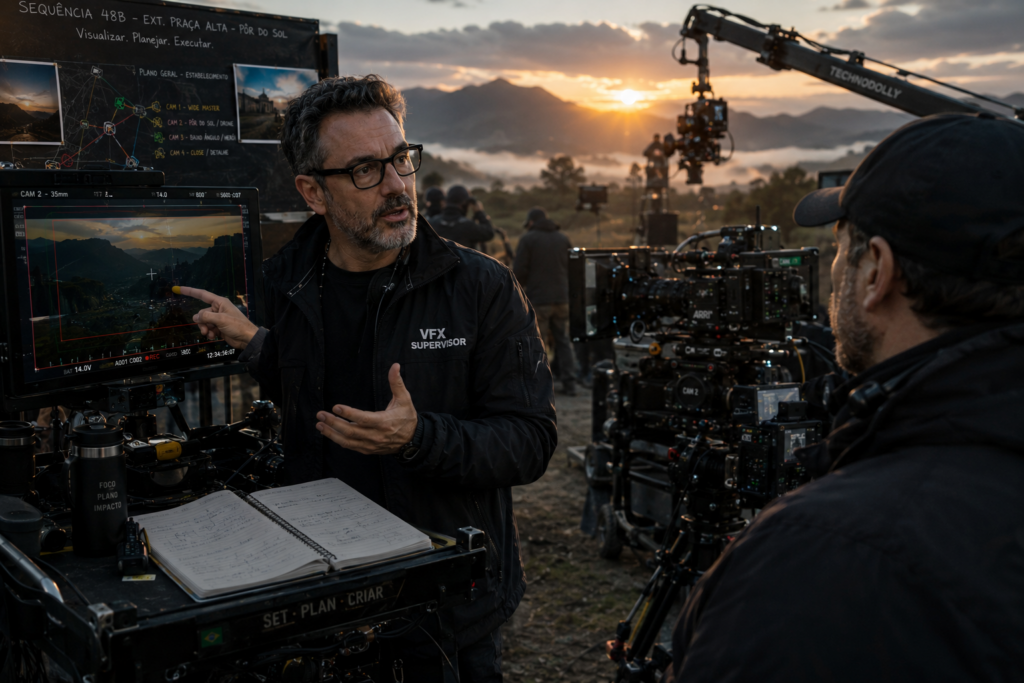
Modern cinema combines a smaller group of physical extras with sophisticated visual effects techniques.
Camera Tiling Techniques
One of the most effective and budget-friendly methods for creating the illusion of a vast crowd is camera tiling.
In this approach, the camera is locked off on a sturdy tripod or mounted on a programmable motion control rig.
The crew shoots a group of 50 to 100 extras in one specific section of the set.
Next, the same group changes costumes, alters their props, and moves to an adjacent section of the frame while the camera repeats the exact same movement.
In post-production, digital compositors layer the different takes together, seamlessly creating the appearance of thousands of people filling the entire space simultaneously.
Advanced Crowd Simulation Software
For colossal crowd sequences—such as the massive army battles in The Lord of the Rings or Game of Thrones— VFX studios rely on specialized crowd simulation software such as Massive or Golaem.
These platforms utilize artificial intelligence and behavioral physics.
Each digital agent (a 3D crowd character) is assigned individual behavioral rules, allowing them to navigate terrain,
React to obstacles, and interact with surrounding agents autonomously.
This prevents digital crowds from looking robotic, repetitive, or artificial.
5. Action Direction and Motion Choreography
A static or aimlessly wandering crowd quickly breaks audience immersion.
Therefore, directing background performers requires specialized techniques in social choreography and environmental staging.
Directors and assistant directors assign specific “micro-stories” or practical tasks to subgroups within the crowd.
For instance, in a bustling medieval marketplace scene, two extras might be instructed to haggle over goods,
Another group carries wooden crates, while a family walks briskly past the camera.
These subtle individual actions create natural depth and realistic background activity.
As a result, no matter where the viewer looks within the frame, the environment feels vibrant, organic, and believable.
6. Balancing Physical Presence with Digital Technology
Despite incredible breakthroughs in computer-generated imagery and artificial intelligence,
Physical background extras remain essential to cinematic storytelling.
The tangible interaction between lead actors and real human crowds produces authentic emotional reactions,
Natural physical lighting, and an organic energy that software cannot replicate.
Modern filmmaking achieves success by striking an ideal balance:
Using real extras in the foreground and midground to anchor the scene with human realism,
While digital technology expands the horizon and fills the distant background.
This harmonious blend allows directors to deliver breathtaking visual spectacles that feel both grand and grounded.
Conclusion
Producing film scenes with hundreds of extras is a complex art form blending human resource management, large-scale logistics, and technological innovation.
Behind every unforgettable crowd sequence in cinema history lies the tireless work of hundreds of crew members who transform set coordination into pure movie magic.
Understanding how these massive scenes are produced enhances our appreciation for the extraordinary craft and dedication required to build believable worlds on screen.
The next time you watch a sweeping crowd scene, you will know that every movement on screen was meticulously planned and masterfully executed.
Frequently Asked Questions (FAQ)
How much do background extras get paid in major movie productions?
Extra compensation varies by region, local union regulations, and shot complexity.
In major union productions, background actors receive standard daily rates,
With additional pay bonuses for wearing specialized costumes, undergoing prosthetic makeup, or working night shifts.
How do filmmakers prevent extras from looking directly into the camera lens?
During initial set briefings, assistant directors explicitly point out camera positions and lens angles.
Furthermore, by giving each extra a specific task or focal point within their scene activity,
Performers stay engaged in their action rather than looking at the camera.
What is the difference between a background extra and a supporting actor?
A background extra provides visual atmosphere without speaking lines or participating in key dramatic plot developments.
A supporting actor has a scripted role with spoken dialogue and direct dramatic interaction with the main characters.
Do crowd scenes in LED Virtual Production volumes still use real extras?
Yes. When shooting inside LED volumes (Virtual Production),
Real background extras occupy the physical set space directly in front of the screens,
While digital crowd extensions are projected on the background LED walls in real time.