
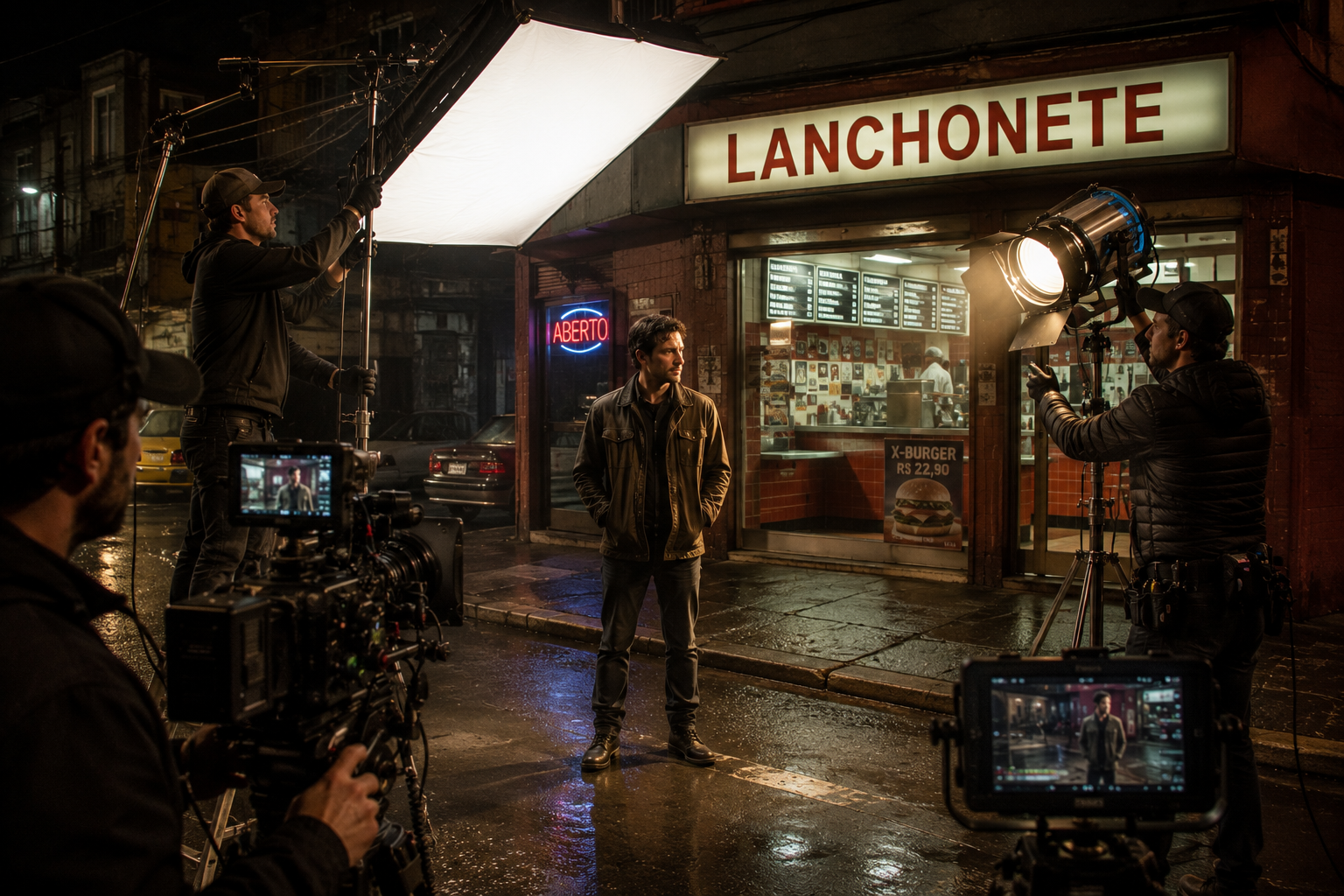
Film Lighting, How Lighting Completely Transforms a Movie Scene
When we sit down to watch a movie, our eyes naturally focus on the actors, the detailed set design, and the elaborate costumes.Yet an invisible force operates within every single frame, quietly instructing our brains on exactly how we should feel about what we are seeing: lighting. Long before a character speaks their first line of dialogue or the musical score drops its first note, light establishes the tone, the mystery, the comfort, or the underlying threat of a scene.
In visual storytelling, lighting serves a purpose far greater than the basic technical task of illuminating a scene for the camera sensor. It acts as a living narrative tool capable of altering our perception of time, manipulating a character’s psychological state, and fundamentally changing the visual meaning of a story. The exact same set with the same actors can project radiant joy or claustrophobic dread depending entirely on where the light sources are placed. This guide explores how cinematic lighting works, breaks down essential lighting techniques, and reveals the profound impact light has on the art of filmmaking.
The Invisible Language of Light in Cinema
Cinematic lighting works subliminally on the human mind. While production design establishes what is physically present in a location, cinematography decides what should be revealed and what should remain hidden in the shadows. This deliberate interplay between light and darkness builds an invisible visual language that shapes how audiences interpret a narrative.
When lighting is crafted with artistic intent, it communicates character psychology without relying on heavy exposition. A protagonist bathed in soft, wrapping light immediately projects innocence, vulnerability, or purity. Conversely, a character whose eyes are buried beneath heavy, downward shadows instantly triggers suspicion, moral ambiguity, or internal conflict.
Furthermore, light creates the optical illusion of three-dimensional depth on a flat screen. Because cinema is projected onto a two-dimensional surface, cinematographers rely on light-to-dark contrast ratios to give volume, shape, and physical texture to sets, props, and human faces.
Three-Point Lighting: The Technical Foundation of Filmmaking
To understand complex lighting setups, it helps to examine the classic framework upon which traditional cinema was built: three-point lighting. This foundational setup serves as the primary starting point for both high-budget Hollywood productions and independent videography.
Key Light
The Key Light serves as the primary and strongest light source in the scene. It dictates the overall exposure of the subject, sets the motivation for where ambient light appears to originate from (such as a nearby window or the sun), and creates the dominant shadows across the actor’s face. The placement of the key light establishes the fundamental visual style of the shot.
Fill Light
Positioned on the opposite side of the key light, the Fill Light softens and controls the depth of the shadows created by the key light. The intensity ratio between the key and fill lights determines the scene’s contrast. A bright fill light creates a clear, low-contrast, open mood, whereas a dim or absent fill light results in sharp, dramatic shadows.
Backlight or Rim Light
The Backlight is positioned behind the subject, pointing toward their back, neck, or hair. Its vital job is to create a fine outline or edge of light around the actor’s silhouette. This subtle rim of light visually separates the character from the background geometry, preventing them from blending into dark sets and enhancing the perception of depth.
Crafting Atmosphere and Emotion: Hard Light vs. Soft Light
One of the most consequential stylistic decisions a cinematographer makes is choosing between hard light and soft light. This choice radically alters the emotional response of the audience.
Hard light originates from small, direct, or focused light sources relative to the subject—such as direct mid-day sunlight or un-diffused spotlight beams. It produces sharp-edged shadows, specular highlights, and high contrast. Cinematographers lean on hard light in thrillers, crime dramas, film noir, and intense character studies because it emphasizes facial lines, skin textures, and harsh angles, instilling a sense of tension, danger, or raw realism.
Soft light, by contrast, occurs when light passes through large diffusion materials or bounces off broad reflective surfaces before reaching the subject. It creates gentle, gradual transitions between illuminated areas and shadows, minimizing skin blemishes and smoothing out harsh facial features. Soft light is the go-to standard for romantic comedies, period dramas, and intimate emotional moments, as it evokes feelings of warmth, idealized beauty, and tranquility.
The Psychology of Color Temperature and Chromatic Palettes
Color temperature adds another layer of psychological resonance to visual storytelling. Measured on the Kelvin (K) scale, the color tint of light dramatically alters how viewers perceive the physical temperature and mood of a environment.
Warm color temperatures (ranging from 2,000K to 3,200K) lean into deep ambers, oranges, and golden yellows. They mimic tungsten bulbs, candlelight, or late afternoon sunsets. These hues are frequently paired with feelings of nostalgia, home comfort, romance, or, in specific narrative contexts, scorching desert heat and oppression.
Cool color temperatures (above 5,600K) produce crisp blue, cyan, and stark white tones, echoing moonlight, overcast skies, or industrial fluorescent fixtures. In cinema, cool color palettes evoke emotional isolation, melancholia, clinical environments, technological threat, or biting winter cold.
Cinematographers regularly mix contrasting color temperatures within a single frame—such as cool blue moonlight spilling through a window onto an actor lit by the warm amber glow of a bedside lamp—to create rich chromatic contrast and highlight inner emotional conflict.
Iconic Cinematic Styles: High-Key, Low-Key, and Chiaroscuro
Throughout film history, specific lighting styles have evolved to define entire cinematic genres.
-
High-Key Lighting: Characterized by bright, even illumination with minimal shadows. High-key setups use high levels of fill light to eliminate dark contrast zones. This style is the visual baseline for sitcoms, classic musicals, and upbeat commercial media, projecting safety, openness, and optimism.
-
Low-Key Lighting: The direct opposite of high-key. Low-key setups feature deep shadows, dark tones, and a dominant single light source with little to no fill light. It is the signature look of horror films, sci-fi thrillers, and neo-noir mysteries, where danger lurks in the unseen areas of the frame.
-
Chiaroscuro: Inspired by Renaissance painters like Caravaggio and Rembrandt, chiaroscuro employs extreme, painterly contrasts between focused light and rich darkness. This high-contrast technique creates bold visual compositions, ideal for showcasing moral duality or deep psychological turmoil.
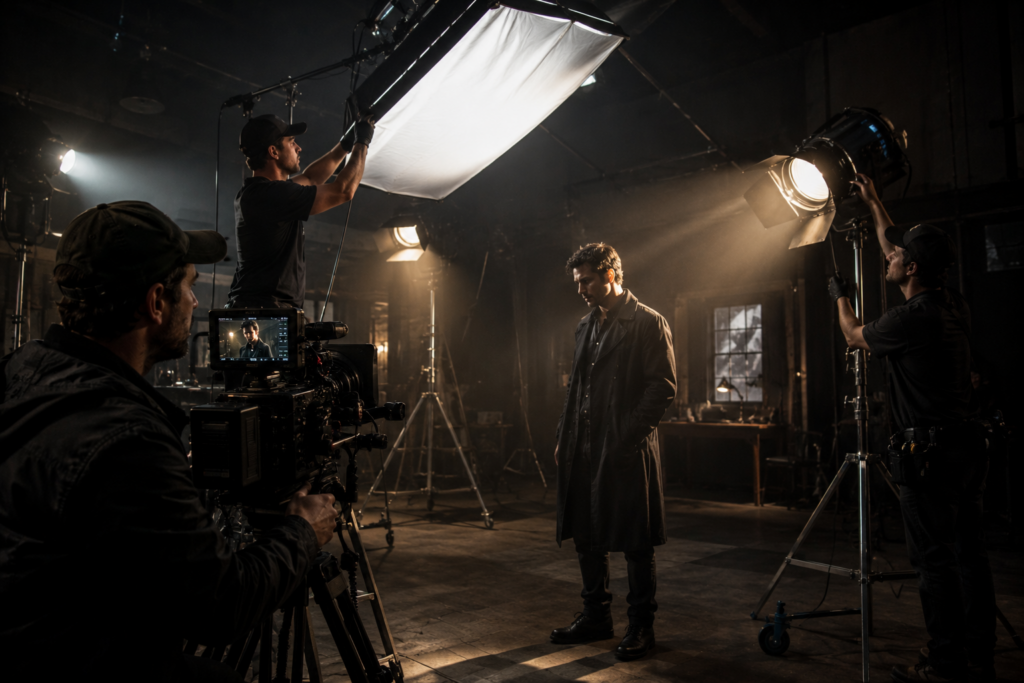
Guiding the Viewer’s Eye and Establishing Visual Hierarchy
The human brain possesses an automatic visual impulse: in any picture, our eyes immediately jump to the brightest point of contrast in the frame. Visual storytellers use this hardwired response to control the audience’s focus with incredible precision.
Through selective lighting, a cinematographer can draw immediate attention to a key prop hidden on a cluttered table, signal which character holds power in a conversation, or reveal a subtle clue in the background without needing a jarring camera zoom.
If a scene’s lighting is poorly managed—such as a background wall being significantly brighter than the lead actor’s face—the viewer’s eyes will constantly drift away from the central action, creating unconscious visual fatigue. Proper lighting hierarchy keeps the audience intuitively locked into the narrative flow.
Practical Lighting Tips for Independent Filmmakers
Creating impactful cinematic lighting does not require multi-million-dollar Hollywood studio rigs or expensive industrial fixtures. Independent filmmakers and digital content creators can achieve stunning cinematic aesthetics by applying core lighting principles creatively.
-
Harness Natural Golden Hour: Schedule exterior shoots during “Golden Hour”—the hour right after sunrise or just before sunset—when natural sunlight is soft, low on the horizon, and richly warm.
-
Embrace Practical Lights: Incorporate “practicals”—light sources visible inside the scene, such as desk lamps, streetlights, or neon signs. Practicals add real-world texture, enhance depth, and motivate your main lighting setups naturally.
-
Diffuse and Bounce Cheap Lights: Soften harsh, budget-friendly LED panels or work lights by shooting them through frosted diffusion paper, white shower curtains, or bouncing them off inexpensive foam-board sheets.
-
Separate Subject from Background: Avoid placing actors directly against flat, unlit walls. Pull subjects several feet forward and cast a subtle rim or background light behind them to create separation and spatial depth.
Conclusion
Lighting is the fundamental soul of visual storytelling. It holds the singular power to transform an ordinary room into a place of hope or a chamber of terror. Far beyond fulfilling the basic technical requirement of exposing a camera sensor, light is the medium through which filmmakers paint mood, sculpt physical form, and guide our deepest emotional reactions.
The next time you watch a movie, take a moment to look beyond the spoken dialogue and observe how light and shadow move across the screen. You will realize that the true magic of cinema lies in the subtle, masterly art of controlling light.
Frequently Asked Questions (FAQ)
What is the main difference between High-Key and Low-Key lighting?
High-key lighting uses bright, even illumination with low contrast and minimal shadows, making it common in comedies and family films. Low-key lighting relies on high contrast, deep shadows, and minimal fill light to create atmospheric tension, making it ideal for thrillers, noir, and horror.
What are “practicals” in film lighting?
Practicals are light sources that are physically visible inside the camera frame as part of the set design, such as table lamps, lanterns, television screens, or candles. They add realism to the environment and justify the direction and color of the scene’s primary lighting.
Why is soft light commonly preferred for actor close-ups?
Soft light wraps gently around facial features, blurring harsh skin textures, wrinkles, and blemishes while creating smooth shadow transitions. This creates a flattering, natural, and visually pleasing portrait look for dialogue scenes.
How does lighting create three-dimensional depth on a two-dimensional screen?
Cinematographers create depth by establishing contrast between light and shadow layers across the foreground, midground, and background. Using backlights to carve out silhouettes also separates subjects cleanly from dark backgrounds, preventing the frame from looking flat.