
The Role of the VFX Supervisor During Filming: Complete Guide
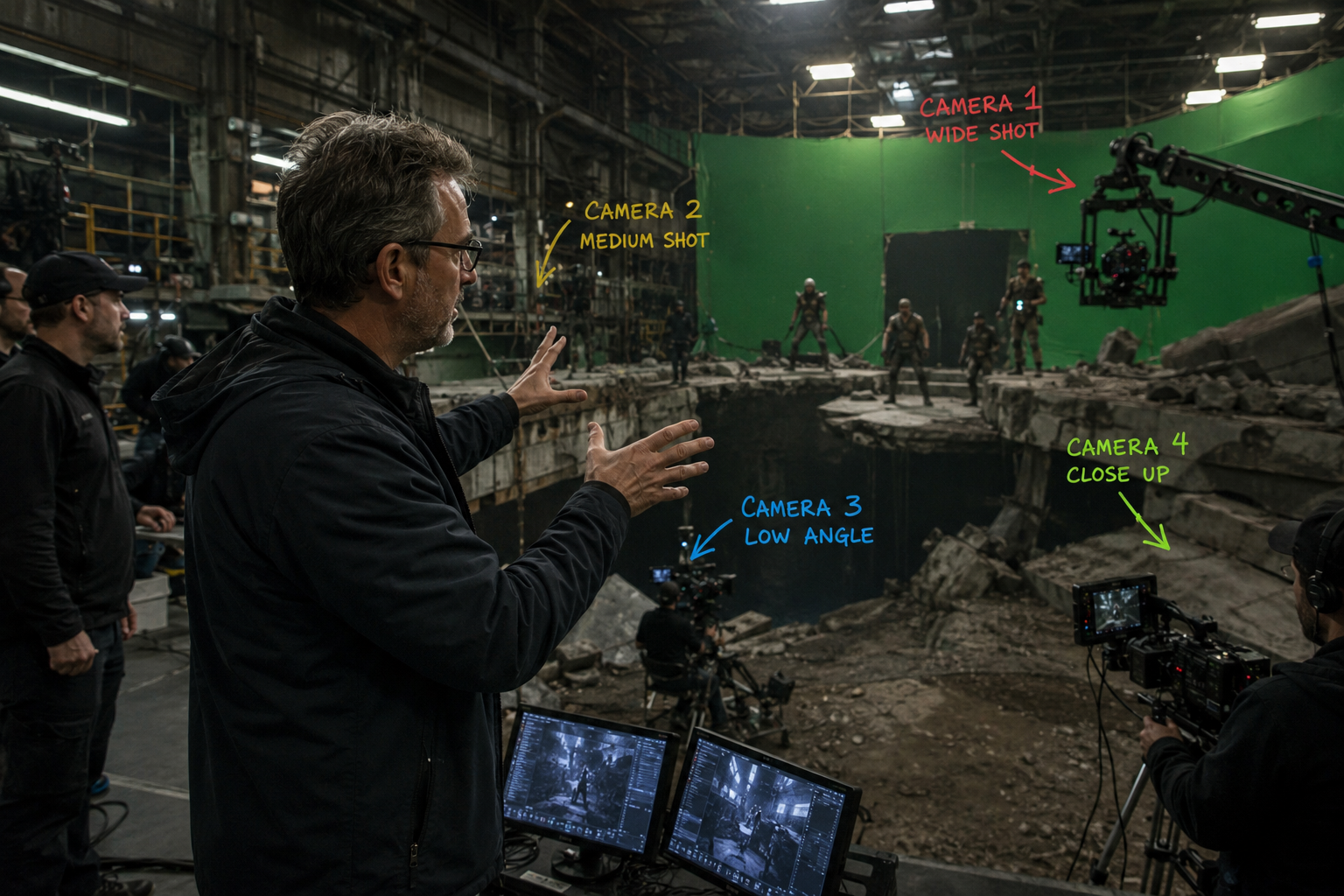
When watching major cinematic blockbusters, hit television series, or striking commercials, it is easy to be captivated by breathtaking fantasy worlds, realistic explosions, and computer-generated creatures. However, behind every spectacular scene involving computer-generated imagery (CGI) lies a meticulous process of technical planning and execution that begins long before post-production. At the very center of this operation on set stands a pivotal figure: the Visual Effects Supervisor (VFX Supervisor).
While many people associate visual effects strictly with computer work performed in post-production studios after shooting wraps, the presence of a VFX supervisor during filming is the ultimate deciding factor between an efficient production and a costly budgetary blowout. The old filmmaking cliché “we will fix it in post” often leads to astronomical expenses and disappointing visual results.
In this comprehensive guide, we will explore in detail why a visual effects supervisor is essential on set, their primary responsibilities alongside the director and director of photography, and how their physical presence during principal photography ensures visual and financial success.
1. What Does a VFX Supervisor Do on Set?
The Visual Effects Supervisor is the key creative and technical professional responsible for translating the director’s artistic vision into viable technical solutions that combine live-action footage with digital elements. During principal photography, their primary objective is to guarantee that all captured footage contains the precise data and technical quality needed for 3D, animation, and compositing teams to work without friction.
On set, the VFX supervisor serves as the vital bridge between the live-action crew and off-site digital artists. They analyze every framing choice, evaluate technical challenges for each shot, and ensure that future digital assets will seamlessly blend into the physical environment.
Their active oversight prevents lighting mismatches, perspective errors, and camera tracking issues from slipping through unnoticed, which would otherwise ruin the realism of the final shot.
2. Crucial Collaboration with the Director and Director of Photography
One of the most strategic responsibilities of a VFX supervisor during filming is working in tight synchronization with the director and Director of Photography (DP). For any visual effect to look convincing, the lighting, lens selection, and camera movement must align flawlessly between the physical and virtual worlds.
Technical Alignment and Visual Language
-
Lens Selection and Framing: The supervisor assists in selecting focal lengths that facilitate the seamless integration of 3D elements, warning when excessive lens distortion might complicate camera tracking (matchmoving).
-
Lighting Harmonization: The physical light falling on live actors must match the direction, color, and intensity of the digital lighting applied to CGI elements. The VFX supervisor guides set lighting to maintain absolute visual consistency.
-
Camera Movement Planning: Complex camera moves require precise spatial data. The supervisor evaluates whether a planned shot can be reconstructed in 3D software or if it requires automated equipment such as motion control rigs.
3. Essential On-Set Data Collection (Data Wrangling)
One of the most technical aspects of the VFX supervisor’s role on set—often supported by a specialized VFX Data Wrangler—is the systematic gathering of technical data for every single take. Without this recorded information, digital artists would be forced to guess critical parameters, dramatically increasing post-production time and costs.
Primary On-Set Data Captured
-
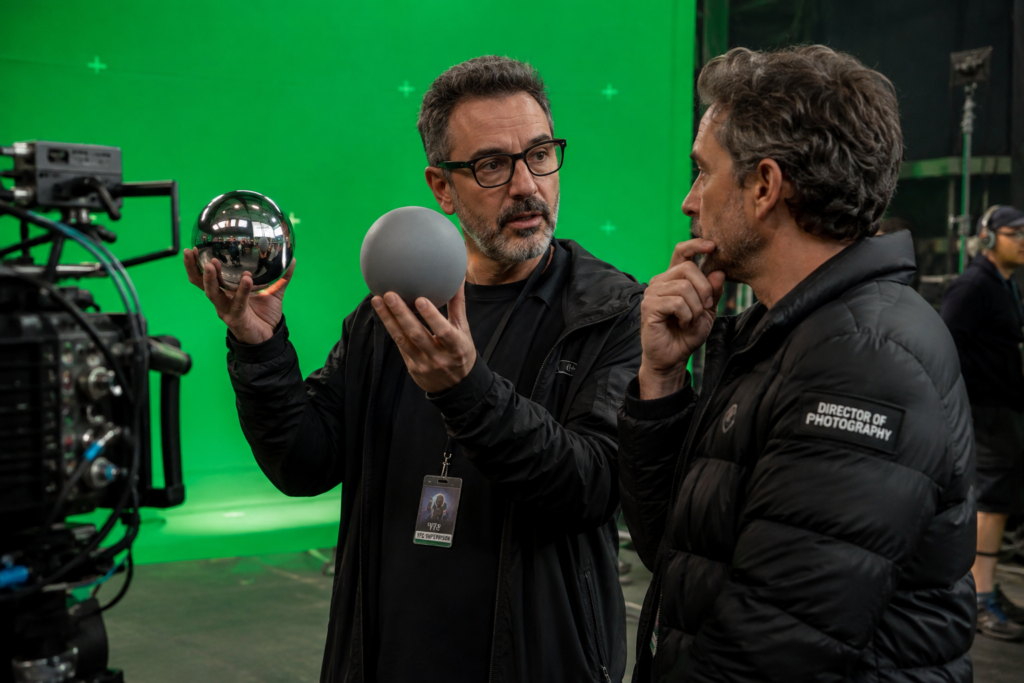
HDRI Lighting Maps: By capturing 360-degree high-dynamic-range photos alongside specular chrome balls and neutral grey balls, the team creates an exact lighting map of the physical set. This allows 3D software to replicate real-world light sources perfectly.
-
Measurements and Photogrammetry: The supervisor measures physical distances between the camera, talent, and key set pieces, while capturing overlapping reference photos to reconstruct sets into accurate 3D digital models.
-
Camera Metadata: Detailed camera logs are recorded for every take, including camera height, tilt angle, focal length, aperture, focus distance, and sensor dimensions.
4. Managing Green and Blue Screens (Chroma Key)
Green screens and blue screens remain classic production tools for isolating actors and props from background elements. However, setting up a chroma key backdrop on set requires strict technical discipline that the VFX supervisor constantly monitors.
Common On-Set Errors Avoided by the Supervisor
-
Uneven Background Lighting: The green or blue fabric must be lit with absolute uniformity to ensure smooth digital keying during compositing.
-
Color Spill: When green light reflects off the backdrop onto an actor’s skin or clothing, it creates an unsightly green halo. The supervisor ensures proper physical separation between talent and the screen to minimize spill.
-
Tracking Marker Placement: To enable virtual cameras to match real camera moves, the supervisor places high-contrast tracking markers across the backdrop with optimal density and distribution.
5. Real-Time Problem Solving and Budget Management
Film sets are dynamic, fast-paced environments subject to unpredictable weather, equipment glitches, and last-minute script changes. A visual effects supervisor must think critically on their feet to deliver creative solutions that keep the shoot on schedule without jeopardizing the budget.
When a practical effect fails to perform as intended—such as a practical explosion lacking impact or a stunt harness remaining visible—the supervisor immediately assesses whether correcting or augmenting the shot with digital effects is practical and cost-effective.
Furthermore, they protect production funds by preventing costly CGI solutions for minor issues that could be resolved practically in minutes on set, such as adjusting a prop or touching up makeup.
6. The New Era: Virtual Production and LED Volume Walls
In recent years, the film industry has experienced a major paradigm shift with the adoption of Virtual Production using LED volumes. In this modern filmmaking workflow, the role of the visual effects supervisor on set has become even more prominent and real-time oriented.
Rather than shooting against green screens and visualizing environments months later in post-production, photorealistic virtual worlds built in real-time game engines (such as Unreal Engine) are displayed directly on massive LED walls behind the actors.
In this environment, the VFX supervisor operates in real time on set, monitoring camera tracking systems linked to the LED volume, adjusting 3D scene perspectives dynamically as the camera moves, and altering virtual lighting instantly at the director’s request.
VFX Supervisor- Conclusion
The work of a Visual Effects Supervisor during principal photography is the cornerstone of the entire VFX pipeline in modern filmmaking. Far from being a passive technical advisor, the supervisor is a vital creative partner who safeguards the director’s artistic vision, ensures technical accuracy, and prevents astronomical post-production expenses.
By meticulously planning data collection, overseeing green screen setups, and harmonizing physical and virtual lighting, the VFX supervisor ensures that cinematic magic happens seamlessly. Investing in an experienced supervisor on set is the fundamental first step toward achieving world-class visual quality in any film project.
Frequently Asked Questions (FAQ)
What is the difference between a VFX Supervisor and a Production Designer?
The Production Designer is responsible for the overall visual style and physical construction of sets, props, and costumes. The VFX Supervisor manages digital elements added in post-production and ensures flawless integration between physical set construction and virtual environments.
Why is it risky to film visual effects scenes without a VFX supervisor on set?
Shooting without a VFX supervisor often leads to mistakes such as incompatible lighting, missing tracking markers, or absent camera data. Correcting these oversights in post-production requires labor-intensive fixes, driving up costs and frequently resulting in artificial, unconvincing visual effects.
Does a VFX supervisor only work on major Hollywood blockbusters?
No. Independent films, television series, commercial advertisements, and music videos frequently use visual effects. Having a VFX supervisor on set is highly recommended for any production involving wire removal, background replacement, digital stunt doubles, or CGI insertion.
What are the chrome and grey spheres used by the supervisor on set?
The chrome ball reflects the entire 360-degree environment, helping 3D artists identify exact light source positions and reflections. The neutral 18% grey ball provides a standardized reference for calculating light intensity, color balance, and contrast on set.