
How to Protect and Preserve Your Camera Gear: A Practical Guide
How to Protect and Preserve Your Camera Gear, Investing in photography gear requires financial planning and passion. Whether you are an enthusiastic beginner with an entry-level camera or a working professional equipped with high-performance lenses and modern mirrorless bodies, the total value stored inside your camera bag is significant. However, many photographers neglect daily maintenance, realizing the consequences of carelessness only when a patch of lens fungus appears or when a critical failure occurs during an important photoshoot.
Camera equipment is a delicate blend of precision mechanics, sensitive electronics, and high-grade optical elements. Dust, moisture, salty sea air, extreme temperature fluctuations, and minor physical impacts are silent threats that shorten your equipment’s lifespan and reduce its resale value over time.
To ensure your cameras and lenses operate flawlessly for years to come, we have compiled this comprehensive guide on how to protect and preserve your photography gear using simple, effective, and accessible practices.
1. The Invisible Threat: How to Prevent Lens Fungus
Fungus is every photographer’s worst nightmare. When airborne fungal spores settle inside a camera lens and encounter a dark, stagnant, and humid environment, they germinate and spread across the optical elements. In addition to reducing image sharpness and contrast, the acidic byproducts produced by growing fungus permanently etch anti-reflective lens coatings.
Preventing fungal growth relies primarily on controlling relative humidity and ensuring proper exposure to natural light.
Essential Humidity Control Strategies
-
Avoid Long-Term Storage in Camera Bags: Backpacks and carrying cases trap atmospheric moisture. When you return from a shoot, immediately remove your cameras and lenses from your bag.
-
Use Silica Gel and Airtight Storage Containers: If you do not own a dedicated electric dry cabinet, store your lenses inside airtight plastic containers with rubber seals, accompanied by silica gel packets. Be sure to replace or reactivate silica gel regularly.
-
Maintain Humidity Between 40% and 50%: Relative humidity levels above 60% accelerate fungal growth. Conversely, extremely dry conditions (below 30%) can dry out internal lens lubricants and rubber seals.
-
Sunlight Exposure as a Preventive Measure: Ultraviolet light naturally inhibits fungal development. Periodically exposing your lenses to indirect sunlight in a dry, clean room helps keep internal glass elements protected.
2. Proper Cleaning Techniques for Lenses and Camera Sensors
Attempting to clean a camera lens or image sensor incorrectly can result in permanent scratches and expensive repairs. Using everyday clothing, paper towels, or napkins must be avoided, as coarse fibers and trapped particles act like sandpaper against delicate optical coatings.
An effective cleaning routine requires the right tools and a safe, step-by-step procedure.
A Safe Step-by-Step Cleaning Sequence
-
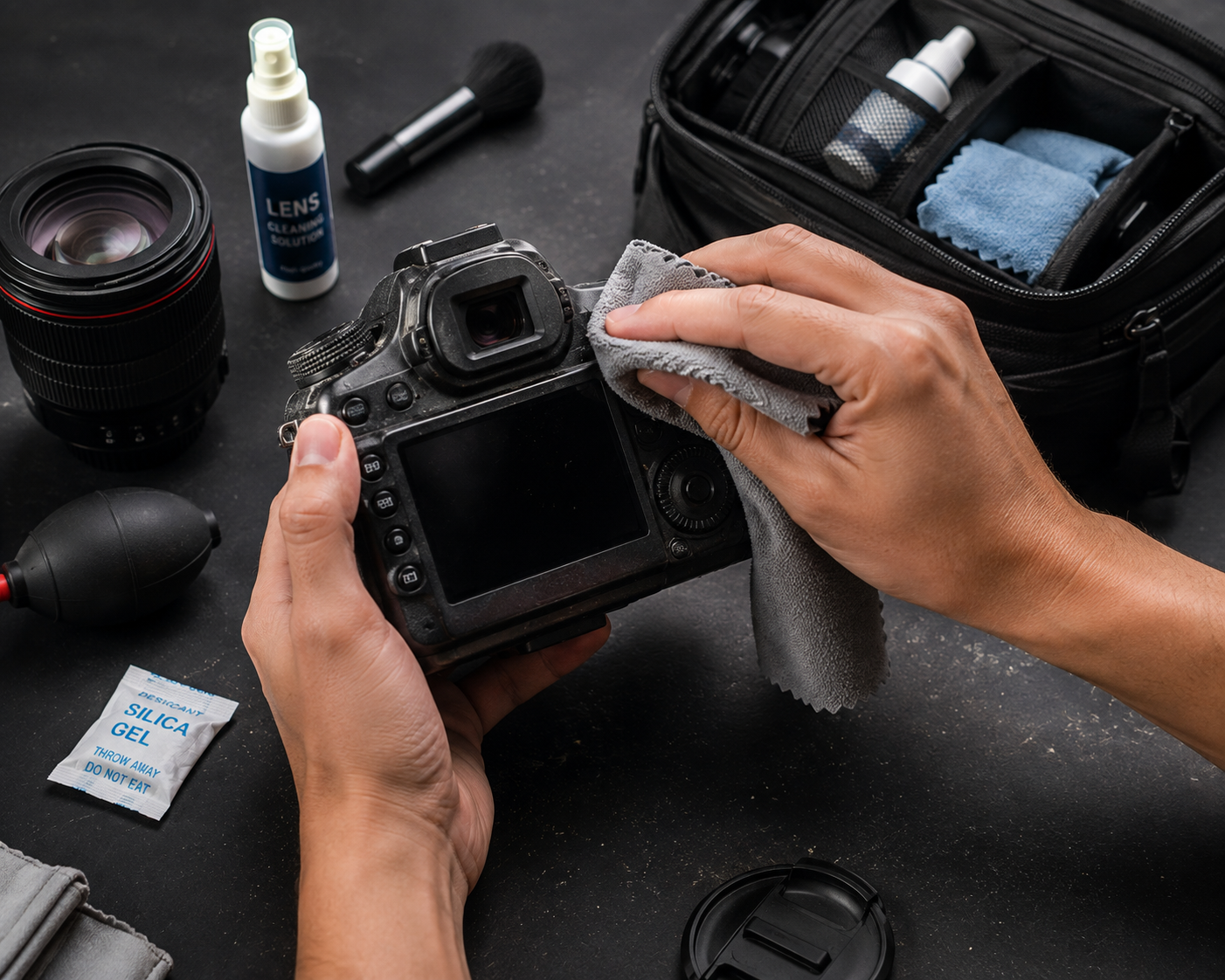
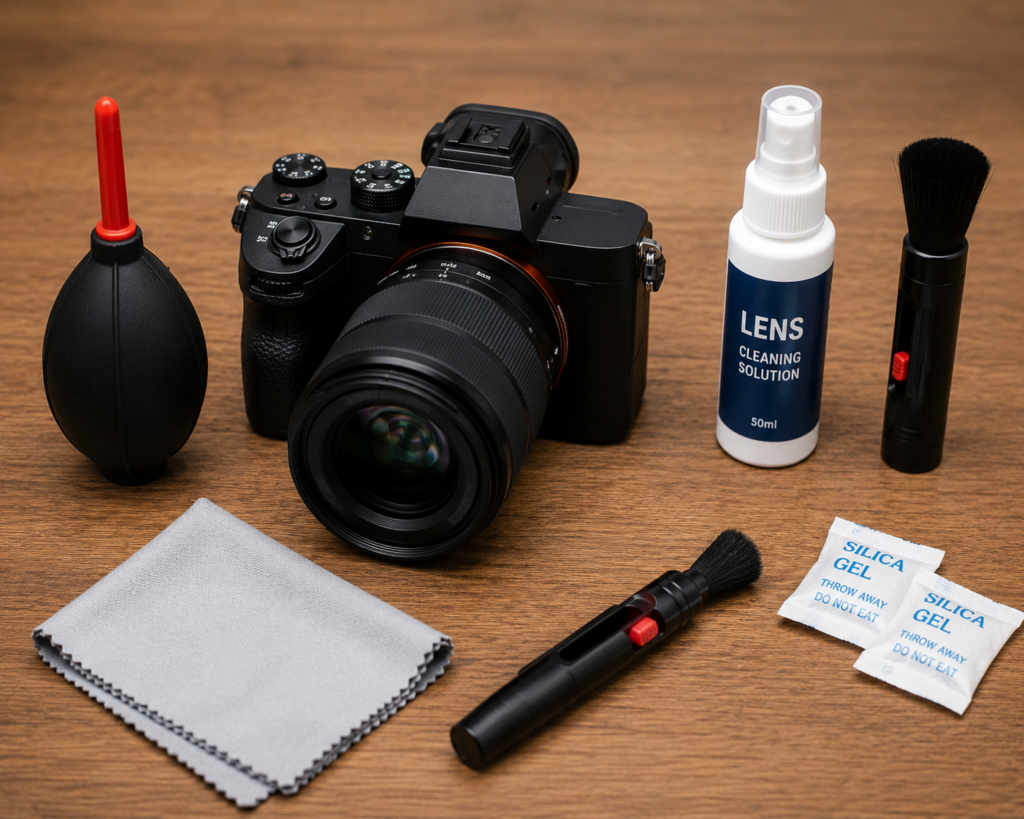
Air Blower (Rubber Bulb): Before touching any glass surface, use a manual rubber air blower to remove loose dust and sand particles. Wiping glass without blowing away grit first will drag hard particles across the surface, scratching the coating.
-
Soft Lens Brush: Use an ultra-soft camera cleaning brush to gently sweep away remaining particles along the outer rim of the front element and lens barrel.
-
Clean Microfiber Cloth: Always use a clean microfiber cloth washed without fabric softeners. Wipe gently in circular motions starting from the center of the lens toward the outer edges.
-
Dedicated Optical Cleaning Fluid: For stubborn smudges or fingerprints, apply a single drop of specialized lens cleaning fluid onto the microfiber cloth—never spray liquid directly onto the glass.
For sensor maintenance, rely primarily on your camera’s built-in ultrasonic cleaning feature. If sensor dust persists, use single-use sensor swabs matched to your sensor size along with appropriate sensor fluid, or visit a professional service center.
3. Safe Storage Solutions at Home or in the Studio
Where your gear rests between assignments is just as critical as how you handle it during a shoot. Stagnant storage environments, unventilated wooden cabinets, or rooms prone to humidity leaks speed up the degradation of electronic circuits and metal mounts.
-
Elevated, Well-Ventilated Locations: Store your camera equipment on open, raised shelves away from exterior walls that experience moisture penetration or plumbing runs.
-
Electric Dry Cabinets: For extensive or valuable camera gear collections, investing in an electronic dry cabinet with digital humidity control provides the ultimate long-term protection.
-
Remove Batteries During Disuse: If you do not plan to shoot for several weeks, remove all batteries from camera bodies and battery grips to prevent complete drainage or chemical leaks.
-
Keep Lens and Body Caps Attached: Always secure front and rear lens caps, as well as body caps, to keep dust and debris from entering open mounts.
4. Safe Transportation: Backpacks, Hard Cases, and Straps
A significant portion of gear damage occurs while traveling. Accidental drops, sudden stops in vehicles, and rough handling during travel can misalign internal optical elements or crack rear LCD screens.
-
Dedicated Photography Backpacks: Invest in bags specifically engineered for photo gear, featuring thick, adjustable foam dividers that cradle each camera body and lens securely.
-
Hard Shell Protective Cases: When traveling by air or over rough terrain, switch to heavy-duty, water-resistant hard cases equipped with customizable foam inserts.
-
Reliable Camera Straps: Whenever working on location, keep your camera attached to a sturdy neck, shoulder, or wrist strap. Heavy-duty straps with secure locking connectors provide peace of mind and prevent accidental drops.
5. Protecting Gear in Extreme Environments: Beach, Dust, and Rain
Shooting outdoors yields breathtaking imagery, but it subjects your gear to challenging environmental elements. Salt spray, sand grains, sudden rainstorms, and rapid temperature changes demand extra vigilance.
-
Coastal Protection Against Salt Spray and Sand: Salt mist speeds up metal corrosion. When shooting at the beach, keep protective UV filters mounted on your lenses and avoid changing lenses outdoors in windy sand conditions. After returning home, wipe down exterior surfaces using a cloth lightly dampened with fresh water.
-
Waterproof Rain Covers: Even if your camera features weather-sealing gaskets, always use dedicated plastic or fabric rain covers during heavy downpours or near waterfalls.
-
Preventing Condensation in Cold Weather: Moving rapidly from cold outdoor temperatures into a warm indoors causes ambient humidity to condense inside cold camera bodies. Seal your gear in an airtight plastic bag before entering heated spaces and allow the temperature to equalize gradually.
6. Preventive Maintenance for Batteries, Memory Cards, and Accessories
Proper equipment care extends beyond camera bodies and lenses to encompass vital accessories that keep your workflow running smoothly.
-
Lithium-Ion Battery Care: Avoid frequently discharging batteries down to 0%. When storing batteries long-term, keep them charged to approximately 50% capacity, and keep them out of hot vehicles.
-
Memory Card Handling: Always format memory cards in-camera before a shoot rather than deleting files on a computer. Never eject a memory card while the camera access light is flashing.
-
Flash Units and Lighting: Remove AA batteries from speedlights and wireless triggers when storing them. Battery acid leakage from depleted alkaline batteries is one of the leading causes of flash unit failure.
Protect and Preserve Your Camera Gear -Conclusion
Caring for your photography gear is an integral part of being a responsible photographer. Incorporating simple maintenance habits into your daily workflow—such as using an air blower before wiping lenses, regulating storage humidity, and choosing proper transportation gear—ensures that your equipment remains dependable whenever inspiration strikes.
By safeguarding your gear against fungus, dust, saltwater corrosion, and physical shocks, you avoid costly repair bills and maintain maximum resale value. Start implementing these equipment care strategies today to protect your investment and enjoy years of flawless performance!
Frequently Asked Questions (FAQ)
How can I tell if my lens has fungus inside?
Hold the lens up to a bright light source or shine a flashlight through the glass while inspecting it from both ends. Fungus appears as web-like threads, small cloudy spots, or hazy patches spreading across internal glass surfaces.
Is it safe to use 70% rubbing alcohol or glass cleaner on lenses?
No. Standard rubbing alcohol and household glass cleaners contain harsh chemicals that can strip away multi-coated optical layers. Always use dedicated camera lens cleaning fluids and specialized microfiber cloths.
What should I do if my camera gets wet or submerged in water?
Turn off the camera immediately and remove both the battery and memory card to prevent electrical short circuits. Do not attempt to turn it back on. Wipe the exterior dry, seal the camera in a container with fresh silica gel packets, and bring it to a professional repair shop as soon as possible.
Can I store my camera gear inside my camera bag long-term?
Storing gear in camera bags long-term is not recommended. Fabric bags trap moisture and restrict airflow, creating ideal conditions for fungal growth. Use bags strictly for transit and store equipment in well-ventilated spaces or dry cabinets.