
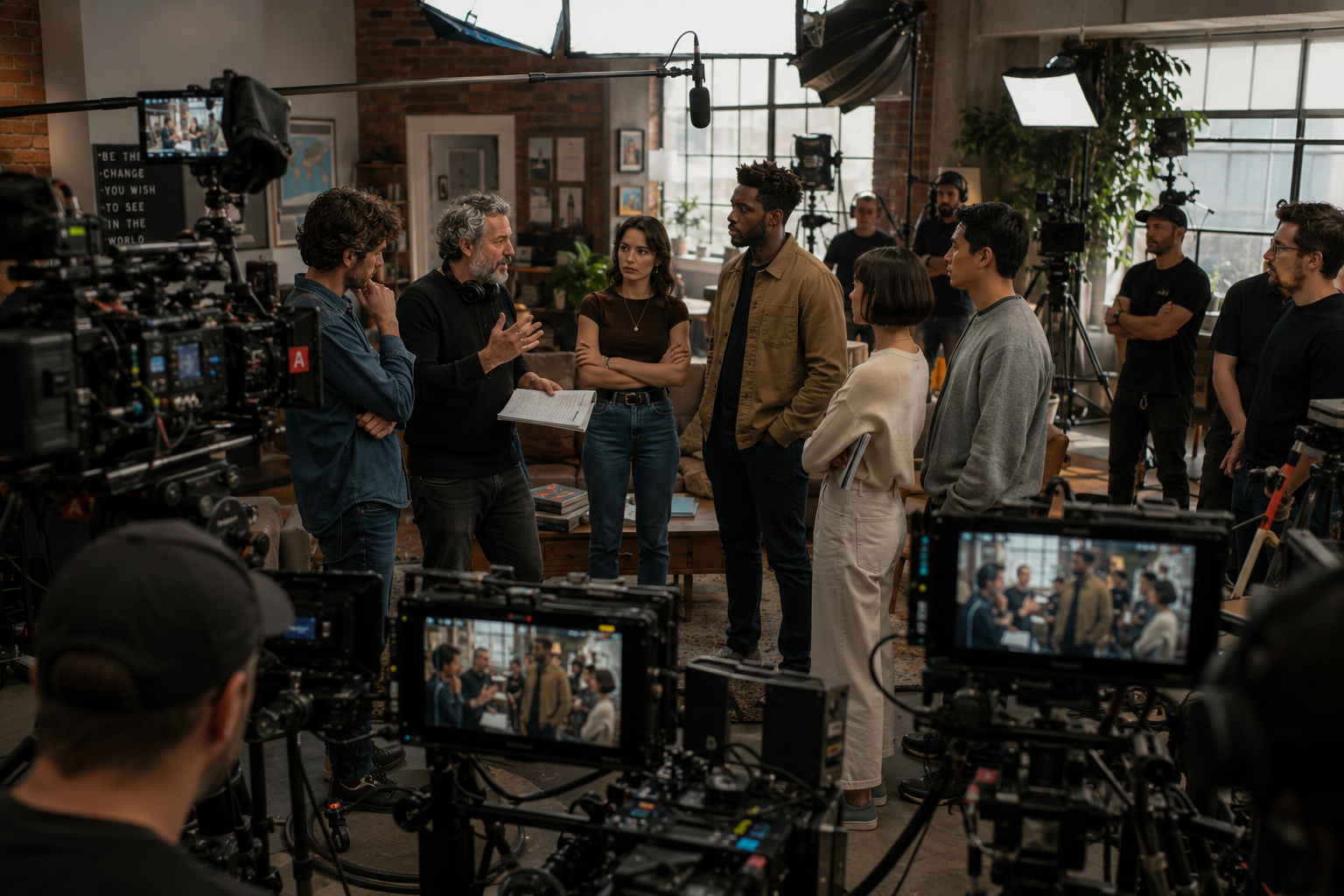
The Truth About Rehearsals Before Filming Begins in Movies and TV Shows
When watching an emotionally charged scene in a hit television series or a razor-sharp dialogue exchange in a blockbuster movie, it is remarkably easy to believe that everything unfolded spontaneously in front of the lens. We see actors trading intense glances, delivering dialogue effortlessly, and moving with natural ease through their environment. For audiences who only experience the final product on screen, it feels as though the director simply turned on the cameras, shouted “Action!”, and allowed raw talent to take over. However, behind the scenes lies a far more strategic and calculated reality: the crucial rehearsal and pre-production phase.
The truth about how actors rehearse before principal photography actually starts often surprises even the most passionate film buffs. Unlike theater, where actors spend months repeating the exact same play on a stage before opening night, the film and television industry employs vastly different approaches. While some directors demand weeks of immersive preparation and meticulous practice before stepping onto a soundstage, others intentionally eliminate formal rehearsals altogether to preserve the raw unpredictability of first takes.
In this comprehensive guide, we reveal the behind-the-scenes reality of this preparation, exploring how table reads, scene blocking, physical conditioning, and the invisible labor that precedes the first day of shooting shape the stories we love.
1. The Myth of Pure Spontaneity on Set
There is a popular romantic notion that brilliant screen acting stems purely from flash-in-the-pan improvisation and instinct. While unscripted moments have certainly produced some of cinema’s most iconic lines, the vast majority of unforgettable performances are the product of rigorous advance work. Pre-filming rehearsals act as a safe creative laboratory where actors and directors can experiment, test emotional intentions, adjust pacing, and construct complex character psychology away from the high-pressure environment of the set.
On a major film production, time is the single most expensive and scarce resource. Every minute spent under blazing studio lights with high-end camera equipment and a hundred crew members—from gaffers to set decorators—costs thousands of dollars. Wasting precious production time on set to figure out how a scene should be interpreted is a luxury that very few productions can afford.
Consequently, the rehearsal period is vital for aligning the director’s creative vision with the cast before the official shooting schedule begins ticking away.
2. The Table Read: The Cast’s First Official Assembly
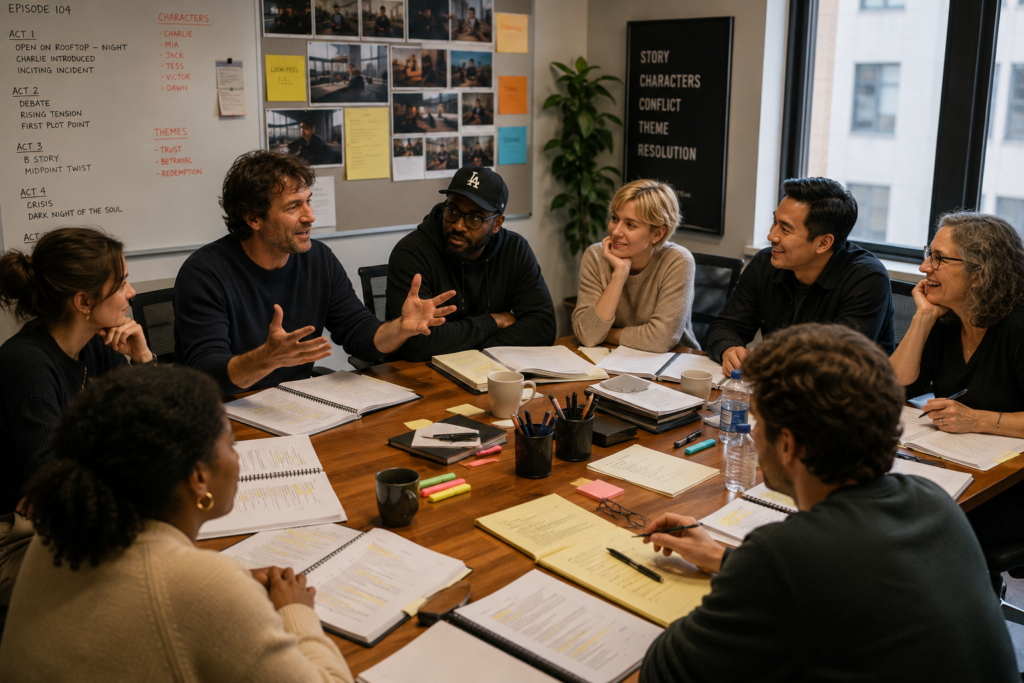
The initial major milestone in preparing almost any film or television project is the table read (or read-through). At this stage, the primary cast, director, screenwriters, executive producers, and key department heads gather around a large table to read the entire screenplay aloud from start to finish.
This collective reading fulfills several essential strategic functions for the project:
-
Pacing and Dialogue Assessment: Hearing the script spoken aloud by the actual actors immediately reveals lines that sound awkward, jokes that fall flat, or scenes where narrative momentum drags.
-
Building Ensemble Chemistry: It is frequently the first time actors hear their scene partners’ voices in character, allowing them to begin establishing authentic interpersonal dynamics.
-
Technical Alignment: Production designers, costume designers, and cinematographers listen closely to absorb the emotional tone, helping them refine their visual planning.
In long-running television productions, the table read is a cherished weekly ritual that kicks off the production cycle for each new episode.
3. Blocking the Scene: Connecting Actors, Cameras, and Space
Once the text is understood, physical preparation takes center stage. Blocking is the process through which the director and the director of photography (DoP) map out where actors will stand and how they will move relative to the camera throughout a scene.
During blocking, every movement is calculated with precision. On which word does a character rise from their chair? In which direction do they walk while delivering a key line? At what exact mark on the floor must they stop so they remain perfectly in focus and under key lighting?
Technical precision at this stage is mandatory. If an actor misses their physical mark on the floor by just a few inches, they can drift completely out of focus or fall into darkness. Furthermore, in scenes involving physical intimacy or vulnerability, this stage is carefully overseen by an intimacy coordinator—a specialized professional who choreographs physical touch ethically and safely.
4. Movies vs. TV Shows: The Dramatic Difference in Rehearsal Time
The amount of time allocated to rehearsals varies dramatically based on the medium, budget, and schedule. Feature films and television series operate on vastly different production timelines.
| Evaluation Factor | Feature Films | Television Series |
| Preparation Window | Typically 2 to 6 weeks of dedicated rehearsal | Ranging from a few days to mere hours |
| Primary Focus | Deep character psychology and tonal exploration | Technical blocking and fast line memorization |
| Shooting Pacing | Slower (averaging 1 to 3 script pages per day) | Rapid (averaging 5 to 10 script pages per day) |
| Directorial Continuity | Guided by a single director throughout | Rotating directors changing from episode to episode |
While auteur cinema may afford actors weeks to debate character backstories and subtle psychological motivations, television actors must be exceptionally nimble. They often receive revised script pages hours before shooting and block their scenes minutes before cameras roll right on set.
5. Specialized Preparation: Stunts, Accent Coaching, and Skill Training
Not all rehearsals consist of sitting around a table passing lines. When a screenplay demands specific physical, tactical, or linguistic skills, the pre-production window transforms into an intensive boot camp that can last several months.
-
Fight Choreography and Stunts: Action films and sci-fi epics require actors and stunt performers to practice hand-to-hand combat routines hundreds of times. The goal is to make every punch and dodge look terrifyingly real while ensuring absolute physical safety.
-
Dialect Coaching: When actors portray characters from different historical eras, regions, or countries, dialect coaches work with them daily to master subtle phonetic nuances and speech rhythms.
-
Specialized Skill Acquisition: Learning to play an instrument, mastering classical dance, handling specialized vehicles, or horseback riding requires dedicated pre-production practice so the actor appears to be a seasoned expert on camera.
6. Why Some Directors Choose Not to Rehearse
Despite rehearsals being considered an industry standard, a respected school of thought among filmmakers actively rejects advance acting rehearsals. For these directors, over-rehearsing a scene risks roboticizing the cast, stripping away the electric energy of first-time discovery.
Filmmakers who embrace this philosophy prefer actors to meet their scene partners directly on the set. Rather than repeating dialogue endlessly in a conference room, these directors engage in deep conversations about character concepts, reserving the physical performance for the exact moment the cameras are rolling.
This approach is risky and requires immense trust between the director and cast, but it frequently yields performances that feel exceptionally grounded, raw, and vibrant.
7. Frequently Asked Questions (FAQ)
Are actors paid during the rehearsal period?
Yes. In unionized professional productions, rehearsal time is officially classified as working hours. Contracts mandate that actors receive proportional compensation throughout the entire pre-production phase.
What happens if a script isn’t working during the table read?
It is extremely common for screenplays to undergo immediate rewrites following a table read. When writers and producers hear that dialogue sounds unnatural or that a scene drags, pages are revised before filming begins.
What is the primary difference between a table read and blocking?
A table read focuses on dialogue, character interpretation, and vocal rhythm while seated around a table. Blocking is physical rehearsal on location or set, mapping out actor body movements in relation to camera placement and lighting.
How do television actors manage with so little rehearsal time?
Television actors develop highly disciplined memorization techniques and rapid adaptability. Because TV schedules are notoriously strict, the ability to memorize large volumes of dialogue quickly and execute notes on the first take is essential.
8. Conclusion: The Invisible Foundation of Cinematic Storytelling
The truth about rehearsals before filming begins is that there is no single, universal formula for success. The pre-production window is a dynamic creative ecosystem where technical discipline, production logistics, and artistic intuition intersect.
Whether through months of grueling physical conditioning, meticulous script analysis around a conference table, or the deliberate pursuit of spontaneous discovery on set, pre-production serves as the invisible foundation holding up great screen acting. The next time you are moved by a powerful performance on screen, remember that the effortless naturalism you see was forged long before the director ever called “Action!”