
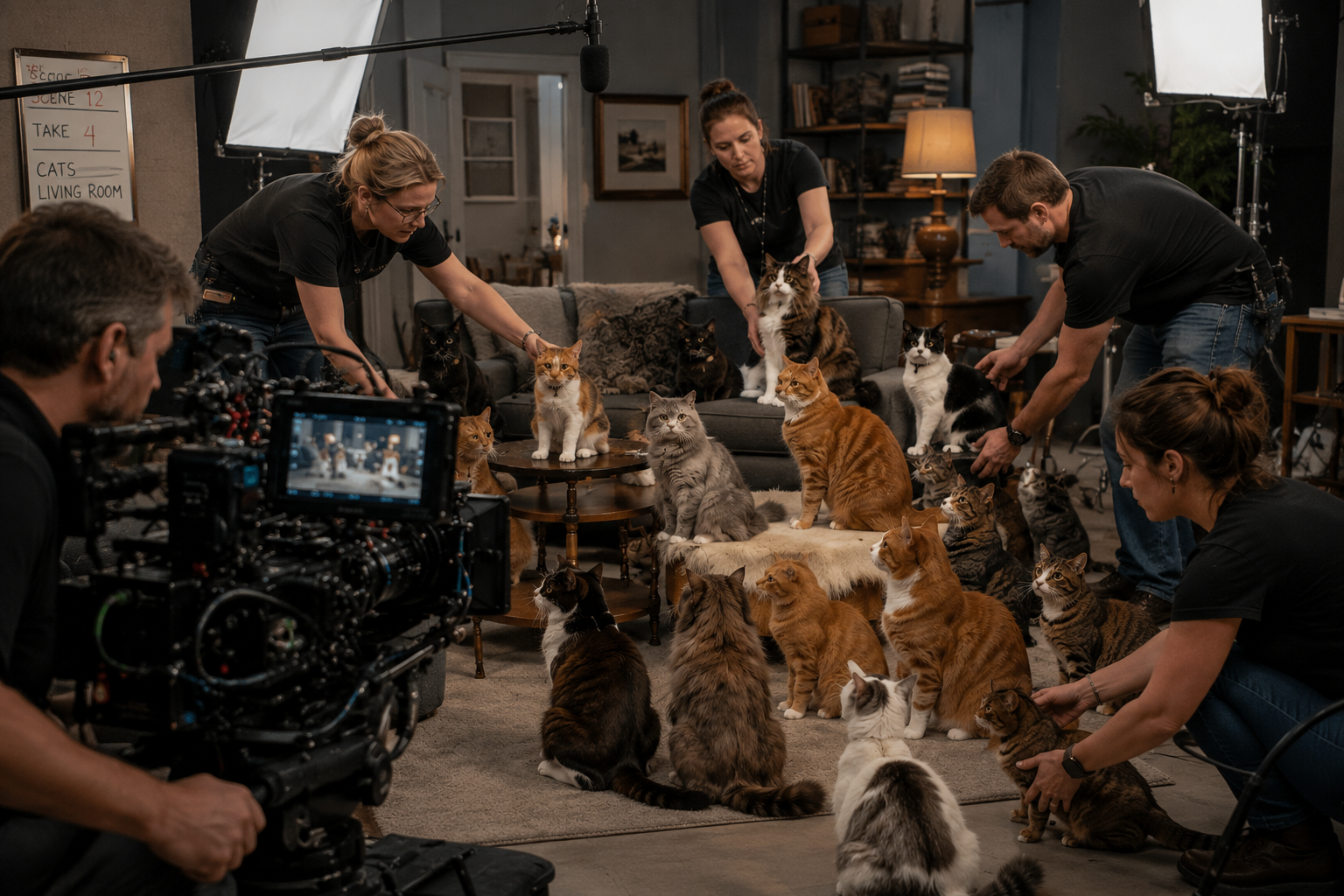
How Scenes with Animals Are Filmed in Movies and TV Shows
Anyone who has been moved by a loyal dog in a cinema masterpiece, impressed by a clever cat in a mystery series, or held their breath watching a horse charge across an epic battlefield has inevitably pondered the same question: how do filmmakers get animals to perform so flawlessly?
On screen, their behavior appears completely natural, spontaneous, and at times astonishingly dramatic. Yet behind every timely bark, mournful gaze, or heroic sprint lies a sophisticated combination of patience, behavioral science, set engineering, and rigorous ethical oversight.
Filming with animals represents one of the greatest challenges in audiovisual production.
Unlike human actors, animals do not read scripts, grasp the concept of fictional drama, or respond to abstract directorial commands. To turn these creatures into movie stars, film productions rely on specialized animal handling teams, positive reinforcement techniques, and clever visual trickery.
In this behind-the-scenes deep dive, we explore how training, safety protocols, and cinematic techniques come together to create unforgettable animal performances on screen.
1. The Vital Role of Professional Animal Handlers on Set
The success of any scene involving animals begins long before the camera rolls. Months prior to principal photography, professional animal handlers and coordinators take charge. These specialists serve as the essential bridge between the screenplay and the animal’s natural instincts.
When a director decides to feature a pet or an exotic animal in a production, the lead handler conducts a thorough script breakdown to identify every required action.
These behaviors range from fundamental commands like sitting and staying to highly complex actions, such as retrieving a specific item, opening a door, playing dead, or displaying alert body language.
Equally important to teaching specific behaviors is desensitization. A movie set is a loud, chaotic environment filled with intense lighting rigs, swinging boom microphones, moving camera dollies, and dozens of crew members. Handlers gradually expose animals to these sensory stimuli within quiet training facilities. By the time filming begins, the animal feels calm, confident, and eager to work amidst the set activity.
2. Training Techniques and Positive Reinforcement
In modern cinema, positive reinforcement is the only accepted and effective approach for working with animals. Coercive or punitive methods have been entirely eradicated from professional productions—not only for ethical reasons, but because a fearful or stressed animal cannot deliver a relaxed, natural performance on camera.
Clickers, Treats, and Silent Cues
Operant conditioning forms the core of film training. Handlers use a clicker—a small tool that produces a distinct double-click sound—to mark the exact millisecond an animal performs the desired behavior. This marker is instantly followed by a high-value reward, such as a favorite treat, a prized toy, or enthusiastic praise.
During filming, however, absolute silence is required on set to capture clean dialogue from the human actors. To navigate this, handlers develop a sophisticated vocabulary of silent visual cues:
-
Hand Signals: Specific gestures guide the animal to walk, freeze, bark, or look in a precise direction without a vocal word being spoken.
-
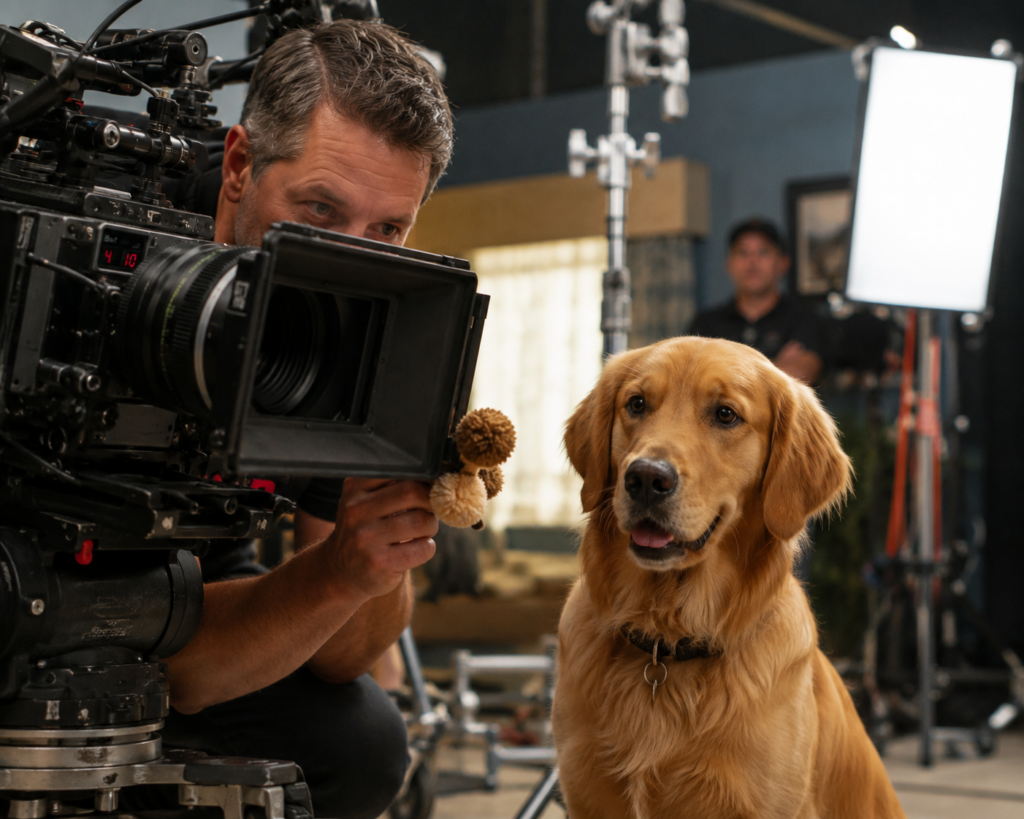
Baiting and Gaze Lines: To direct an animal’s eye-line toward an actor or a specific focal point, the handler positions themselves directly behind the camera lens or alongside the actor while holding a treat or toy.
-
Target Sticks and Lasers: Small visual targets or laser points placed on the ground teach the animal to navigate to its exact physical mark required for camera focus.
3. Animal Stunt Doubles and Multiple Performers for One Role
One of the most surprising secrets of Hollywood filmmaking is that a single animal character is rarely played by just one animal throughout a film or television series.
Just as human stars rely on stunt doubles for demanding sequences, animal actors work alongside specialized double performers.
For a lead canine role, a production often casts three to five dogs of the exact same breed and coat pattern. This multi-actor strategy serves two crucial functions:
-
Protecting Animal Welfare: Long shooting days can be exhausting. Rotating multiple animals ensures no single animal becomes overworked, adhering strictly to required rest, feeding, and play breaks.
-
Specialized Skill Sets: Individual animals possess distinct temperaments and talents. One dog might excel at calm, affectionate interactions during dialogue scenes; another might possess high energy for running and jumping; while a third specializes in intricate object retrieval.
Animal grooming specialists apply subtle, non-toxic, vegetable-based dyes or temporary markings to ensure all double performers appear visually identical on screen.
4. Strict Animal Welfare Standards and Industry Oversight
The presence of animals on set is governed by stringent international welfare standards.
The most prominent oversight body is the American Humane Association (AHA), famous for awarding the registered end-credit trademark: “No Animals Were Harmed.”
To earn this certification, official safety representatives and licensed veterinarians monitor every stage of production on site. Their responsibilities include:
-
Inspecting Accommodations: Ensuring off-camera resting areas feature climate control, fresh water, proper nutrition, and quiet surroundings away from set noise.
-
Verifying Set Safety: Checking that floor surfaces offer proper traction, removing sharp props, and ensuring set structures present no physical hazards.
-
Monitoring Work Hours: Enforcing strict limits on an animal’s active working time, interspersed with mandatory rest periods.
-
Vetoing Dangerous Concepts: Possessing the authority to immediately halt or modify any sequence deemed unsafe or overly stressful for the animal.
5. Camera Tricks and Editing to Safely Simulate Danger
When audiences watch a scene where an animal appears to be in grave peril—such as a dog hanging off a cliff, attacking an intruder, or escaping a roaring fire—what appears on screen is the result of optical illusions, camera angles, and sound design.
In attack or fight scenes, for example, the animal is never displaying genuine aggression.
The dog is actually playing an enthusiastic game of tug-of-war with a hidden rope or plush toy concealed beneath an actor’s wardrobe.
The dog’s relaxed body language and wagging tail are later masked through tight framing, fast-paced editing, and menacing sound effects added during post-production.
For high falls or leaps, soft landing areas—such as air mattresses or cardboard crash boxes covered in artificial foliage—are placed just out of the camera’s frame.
Furthermore, heavy-looking debris or props that appear to fall near animals are constructed from lightweight, soft foam and rubber.
6. The Hybrid Revolution: Real Animals Meets CGI
As digital technology and Visual Effects (VFX) have advanced, the methodology behind animal scenes has undergone a major transformation. Today, filmmakers increasingly favor a hybrid workflow that combines physical performances with computer graphics.
In many modern productions, real animals are filmed in controlled environments to capture genuine expressions, physical presence, and authentic coat textures. Computer-Generated Imagery (CGI) is then used to augment the footage:
-
Subtle Digital Enhancements: VFX artists can digitally alter an ear position, close an open mouth, or adjust a tail wag to reinforce a specific narrative emotion without requiring dozens of additional takes.
-
Digital Doubles for High-Risk Stunts: For scenes involving major explosions, chaotic crowds, or dangerous environments, real animals are completely replaced by photorealistic 3D digital models.
This technological integration achieves spectacular, hyper-realistic visuals while completely eliminating risk or discomfort for living creatures.
7. Frequently Asked Questions (FAQ)
Do animals understand that they are acting in a movie?
No. To an animal actor, filming a movie scene is simply an engaging, highly rewarding training game. They perform behaviors motivated by positive reinforcement (treats, affection, and play) without any concept of fiction, screenplays, or performance.
How are cats trained for film roles given their independent reputation?
While cats are naturally more independent than dogs, they respond exceptionally well to positive reinforcement conditioning, particularly when motivated by high-value wet food or hunting toys. The key to working with felines is patience, short training sessions, and maintaining a quiet, calm set.
What does the “No Animals Were Harmed” disclaimer mean?
This end-credit certification is granted by the American Humane Association after rigorous on-set supervision. It verifies that strict safety guidelines and animal welfare protocols were maintained throughout the entire filming process.
What happens to animal actors after a production finishes?
The vast majority of animal actors belong to professional handlers and live as cherished pets in their homes. Between film projects, they maintain normal routines consisting of exercise, rest, family life, and ongoing enrichment activities.
8. Conclusion: Respect and Magic Behind the Screen
Filming scenes with animals showcases the extraordinary human capacity for interspecies communication and trust.
Behind every heartwarming interaction or thrilling action sequence starring a pet on screen lies the silent, dedicated work of specialists uniting behavioral science with ethical animal care.
Understanding positive reinforcement techniques, the use of double performers, and the seamless integration of digital effects deepens our appreciation for cinema.
The true enchantment of these films lies not only in the flawless illusion presented to the audience, but in the profound respect, safety, and care provided to these remarkable four-legged performers behind the scenes.