
How Directors and Actors Work Together on Set: The Art of Cinematic Collaboration
Cinema is frequently celebrated as one of the most complex and collaborative art forms in the world. On the big screen, audiences are captivated by dramatic lighting, evocative score choices, precise camera framing, and the visceral delivery of a powerful performance. Yet behind every unforgettable scene that moves us to laughter or tears lies a unique and often invisible creative symbiosis: the partnership between director and actor.
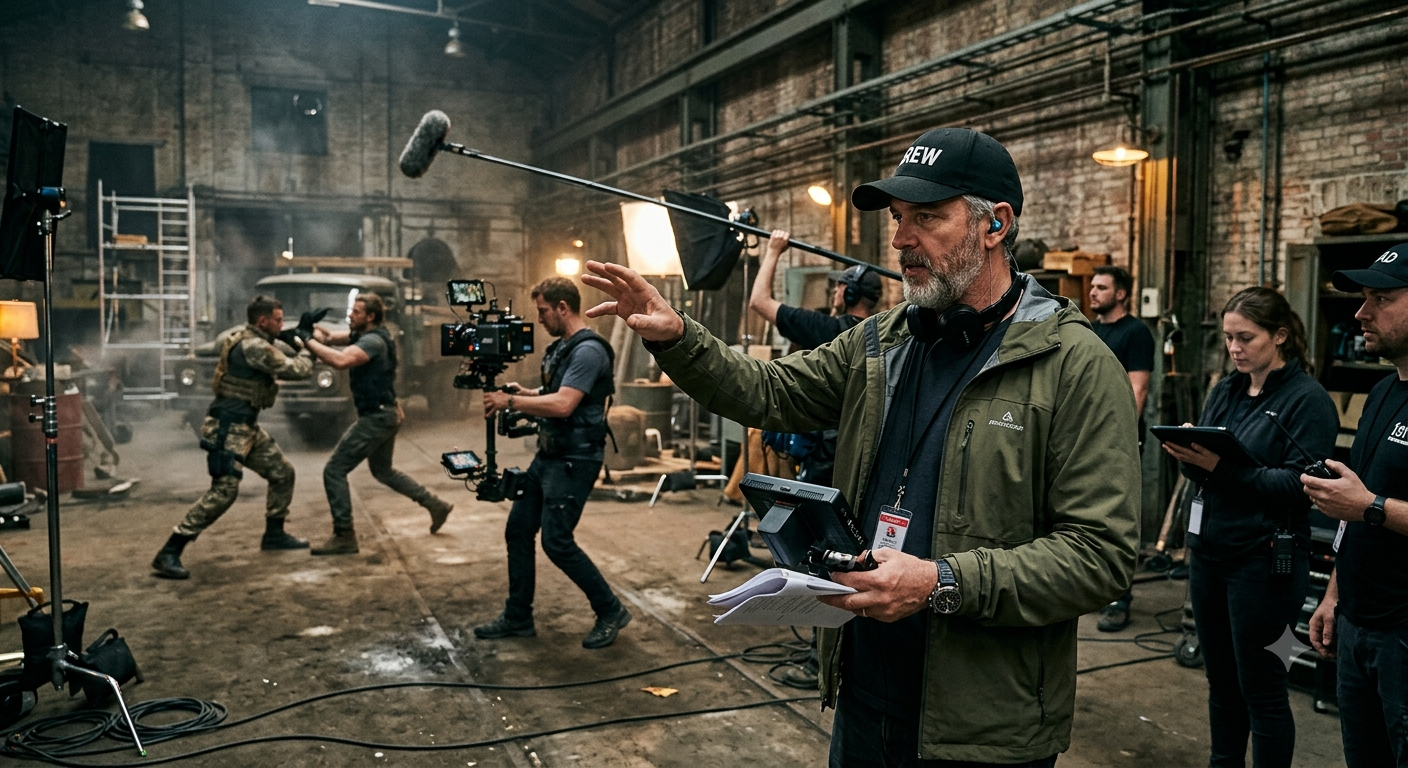
While the director carries the responsibility of executing the overarching vision of the story—coordinating dozens of technical departments—the actor is the face, voice, and physical presence that humanize the screenplay. Within the high-pressure environment of a film set, complete with tight schedules, intricate lighting setups, and bustling crew members, this dynamic must operate like a carefully choreographed dance. But how does this relationship unfold in daily production? How does a filmmaker guide performances without stifling an actor’s natural spontaneity?
In this comprehensive guide, we will explore behind the scenes of director-actor collaboration during production, from early script readings to unscripted moments beneath the studio lights.
1. Preparation Before the First Take: Table Reads and Rehearsals
Although the practical work on set begins when the cameras roll, the foundation of a successful collaboration is laid long before the first call of “Action!” Pre-production is the fertile ground where character concepts and tonal foundations are established.
Aligning the Vision for the Character
In the weeks leading up to principal photography, production teams conduct table reads. During this stage, the director and actors gather to read through the script line by line. This offers a dedicated space to examine a character’s backstory, hidden motivations, core desires, and the subtext underlying the dialogue.
This early exchange ensures the actor thoroughly understands the emotional arc envisioned by the filmmaker. Simultaneously, an observant director uses these conversations to listen to the cast’s insights, often discovering psychological nuances that go beyond what was initially on the page.
2. On-Set Communication: Speaking the Same Language
When production begins, time quickly becomes the most precious resource on set. A director must communicate clearly, efficiently, and adaptively, as every actor possesses a unique working method, background, and sensitivity.
“Action-Based Direction” vs. “Result-Oriented Direction”
One of the most critical principles in directing actors is the distinction between asking for an emotional result and providing a concrete stimulus. Experienced filmmakers avoid abstract commands such as “be sadder” or “look angrier.” This approach—known as result-oriented direction—frequently produces superficial performances.
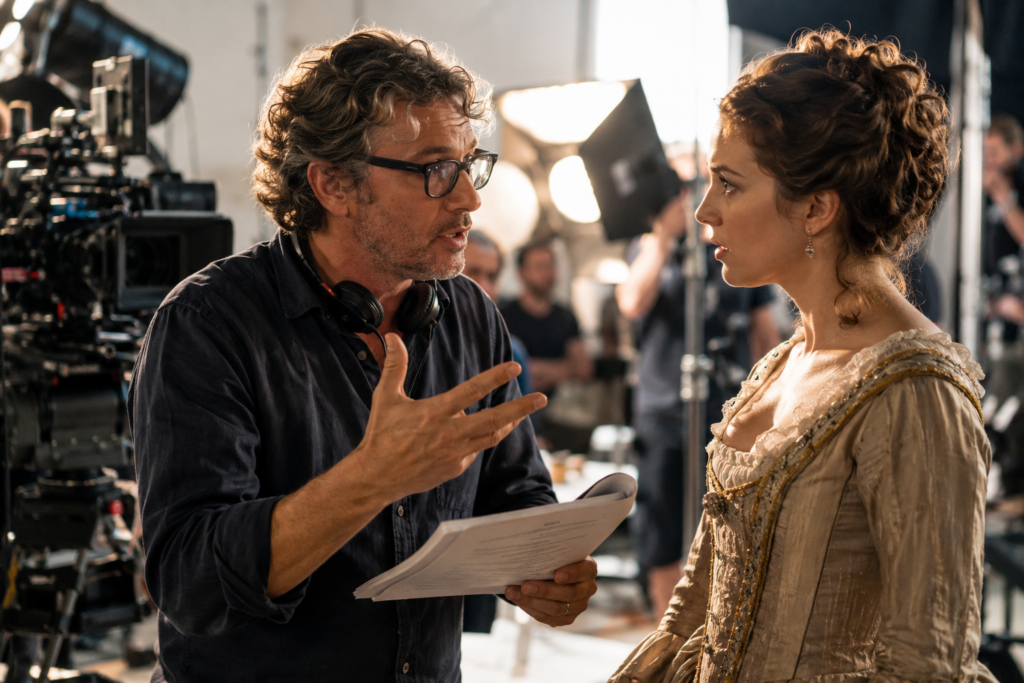
Instead, effective directors employ action-based direction. They supply active verbs or adjust the imaginary circumstances of a scene. For instance, rather than asking an actor to appear threatening, a director might suggest: “Attack with your words, as if you are trying to disarm them.” This shifts the actor’s focus to a tangible goal, prompting an organic and believable emotional response.
3. Building an Environment of Trust and Vulnerability
Acting requires immense emotional vulnerability. To deliver a compelling performance, an actor must expose raw feelings—grief, anger, affection, or frailty—often in front of a sizable crew while positioned inches from a camera lens.
To encourage genuine delivery, the director must cultivate a safe environment on set through key practices:
-
Active Listening: Paying attention not only to technical execution, but also to an actor’s emotional state after each take.
-
Closed Sets: Decreasing set personnel to essential crew members during intimate or intense emotional scenes.
-
Constructive Feedback: Delivering notes thoughtfully to maintain confidence and focus between takes.
When actors trust their director as a creative ally and protector, they feel empowered to take creative risks and push beyond predictable choices.
4. The Dynamic During Filming: Takes, Adjustments, and Improvisation
Capturing a scene rarely happens in a single attempt. Multiple takes are standard to refine framing, focus, lighting, and performance nuances. Repetition serves as the primary tool for polishing a scene.
When Improvisation Transforms a Scene
Not every memorable cinematic moment is strictly scripted. Some of cinema’s most iconic beats emerged from directors granting actors creative freedom while the cameras rolled.
Effective improvisation, however, is structured. Directors typically secure several takes that strictly follow the script first to cover fundamental narrative needs. Once the baseline is established, the director may encourage the cast to experiment—modifying a line, introducing an unscripted gesture, or offering an unexpected reaction to a scene partner. This freedom often captures authentic moments of spontaneity.
5. Directorial Styles and Their Impact on the Cast
How this collaboration unfolds varies significantly depending on a filmmaker’s artistic style and methodology:
-
The Technical Visionary: Prioritizes visual aesthetics, camera movement, and precise framing. This type of director provides explicit instructions regarding physical marks, movement speed, and speech rhythm.
-
The Methodical Collaborator: Focuses primarily on character psychology and dramatic truth, spending extended time conversing with actors to fine-tune emotional nuances before each take.
-
The Intuitive Director: Offers broad freedom for actors to navigate the space naturally, adapting camera positioning around their spontaneous movements.
Versatile actors learn to identify these distinct directorial approaches early on, adapting their workflow to complement the director’s style.
6. The Role of Video Village and “Playback” in Performance
With digital cinema technology, the monitor station—commonly referred to as “video village”—serves as a central touchpoint on set. Following significant takes, directors and actors frequently review playback together.
This joint review functions as an effective tool for visual and performance alignment:
-
It allows actors to calibrate their scale of performance, assessing whether physical expressions translate appropriately for close-up shots versus wide angles.
-
It helps directors visually demonstrate where energy, pacing, or tone needs adjustment.
-
It encourages a collaborative technical dialogue, turning performance evaluation into a shared effort.
7. Conclusion: The Synergy That Transforms Stories Into Art
The relationship between directors and actors during production goes far beyond executing a shooting schedule. It represents a deep creative synergy built on trust, mutual respect, and clear communication.
While the director serves as the conductor overseeing the entire piece, the actors are the soloists who supply its emotional core. When these creative forces work in harmony on set, the material on the page comes to life, generating performances that resonate with audiences long after the credits roll.
8. Frequently Asked Questions (FAQ)
Does a director always tell an actor exactly what to do in every scene?
Not necessarily. Experienced directors often allow actors the freedom to propose initial movements, choices, and emotional intentions for a scene. The director’s role is then to guide, refine, and shape those proposals to align with the film’s overall narrative and tone.
What happens when a director and an actor disagree on set?
Creative disagreements are a normal part of the filmmaking process. When they occur, directors and actors typically discuss the scene privately. A common practical solution is to record two different takes—one reflecting the director’s approach and one reflecting the actor’s—allowing them to evaluate which option works best during the editing phase.
What does “hitting a mark” mean for an actor on set?
A “mark” refers to a specific position on set (often indicated by tape on the floor) where an actor needs to stand or stop so that they remain in proper focus and light. Actors must balance their emotional performance with the technical skill of hitting these physical marks without looking down.
How much rehearsal time do directors and actors usually get before shooting?
Rehearsal time varies widely based on budget, production schedule, and director preference. Large studio productions or auteur indie films may spend weeks rehearsing, whereas fast-paced television schedules or low-budget projects may only allow brief walk-throughs minutes before filming.