
How Rain, Explosion, and Disaster Scenes Are Filmed in Movies: Behind-the-Scenes Secrets
How Rain, Explosion, and Disaster Scenes Are Filmed in Movies
Cinema has the unique power to transport us into extraordinary realities. Sitting in the comfort of a dark theater or on our own couches, we witness devastating storms, apocalyptic detonations, and natural disasters that level entire cities in a matter of seconds. The sheer intensity of these images often makes us forget a fundamental truth: everything we see was meticulously planned and executed by a team of engineers, special effects technicians, and safety coordinators.
The creation of these monumental sequences involves a fascinating blend of physics, chemistry, high-precision craftsmanship, and, of course, cutting-edge computer-generated imagery (CGI). However, contrary to what many believe, the film industry still relies heavily on what are known as “practical effects”—those performed physically on the filming set. The reason is simple: the real-world interaction of actors with tangible elements like water, fire, and debris provides a layer of authenticity that a purely digital environment struggles to replicate.
In this article, we will dive deep behind the scenes of Hollywood and international filmmaking to uncover the hidden engineering behind rain, explosion, and catastrophe scenes. You will discover the optical tricks, unusual materials, and state-of-the-art technology used to orchestrate perfect chaos in a completely controlled and safe manner.
1. The Illusion of Perfect Rain: Why Natural Water Doesn’t Work
One of the biggest surprises for anyone visiting a film set for the first time is discovering that natural rain is a cinematographer’s worst enemy. With very few exceptions, real raindrops are too small, move too fast, and do not reflect light properly to be captured clearly by digital or film camera lenses. If a production tries to shoot during a real rainstorm, the resulting footage will likely just look like a dreary, flat, gray day.
The Engineering of Rain Bars
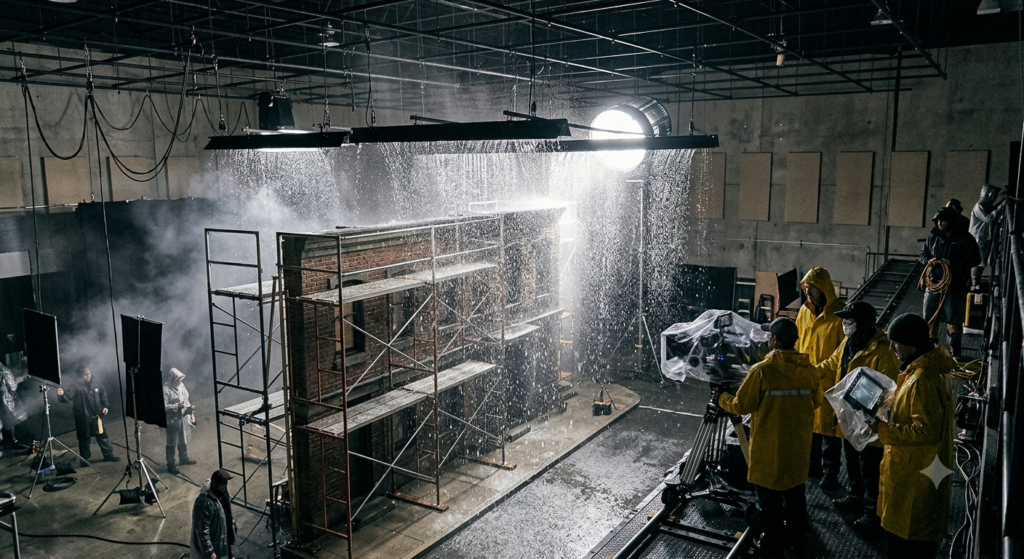
To bypass this physical limitation, special effects crews engineer their own precipitation using equipment known as rain bars or rain birds. These are complex networks of overhead pipes suspended by colossal cranes high above the camera’s field of view. The bars are outfitted with specialized spray nozzles designed specifically to customize the size and density of the falling water droplets.
The water is pressurized using industrial-grade hydraulic pumps. By adjusting the pressure, technicians can simulate anything from a fine, melancholic drizzle for a drama to a torrential downpour for a thriller. In major productions, this water is often sourced from local hydrants or brought in via water trucks. To avoid massive waste, modern sets utilize drainage and filtration systems to catch and recycle the water.
The Secret is in the Backlighting
Even with larger, artificially engineered drops, movie rain would remain practically invisible without the ultimate optical trick: backlighting. To make the water pop in the frame, directors of photography position powerful light fixtures behind the rainy area, aimed directly back toward the camera.
When light passes through the water droplets, it refracts, causing each drop to gleam brightly against the darker background. Without this strategic lighting placement, all that hydraulic effort would be completely lost to the camera. In classic Hollywood—such as the iconic title sequence of Singin’ in the Rain (1952)—it was rumored that crews mixed substances like milk or apple juice into the water to increase the drops’ opacity for black-and-white film. Today, advanced digital sensors make such measures unnecessary.
2. Controlled Fire and Destruction: The Science of Hollywood Explosions
Explosions are the pinnacle of action and espionage films. Yet, a real explosion triggered by dynamite or high-velocity military explosives is incredibly hazardous and, ironically, visually underwhelming. Real-world detonations happen almost instantaneously, yield a thick black smoke that obscures everything, and generate invisible but lethal shockwaves alongside razor-sharp shrapnel.
The Use of Pyrotechnics and Propane Gas
To deliver those iconic, slow-rolling, bright orange fireballs that look spectacular on screen, pyrotechnic coordinators rely on controlled liquid and gaseous fuels—primarily propane gas and commercial gasoline. Propane is the preferred choice because it burns incredibly clean, produces a highly vivid flame, and can be shut off instantly by closing a supply valve.
Technicians utilize devices called mortar boxes (or mortar pots), which are heavy-duty, reinforced metal containers hidden within the set dressing. Inside these boxes, a small electric squib (a low-power detonator) is placed beneath a calculated amount of fuel or flammable powder. When the director calls for action, an electrical pulse triggers the squib, atomizing the fuel into the air where it instantly ignites into a controlled, expanding ball of fire.
Debris That Doesn’t Cut: Substitution Materials
What makes a cinematic explosion terrifying isn’t just the fire, but the debris flying toward the actors. Naturally, real concrete, bricks, and glass would gravely injure the cast and crew. Therefore, everything launched into the air during a detonation is manufactured from ultra-lightweight, soft breakout materials:
-
Sugar Glass or Brittle Resin: Windows meant to shatter are made of specialized plastic resins that break into dull, harmless fragments upon the slightest impact.
-
Peat Moss and Ground Cork: The dirt and rocks blasted skyward in war scenes are actually painted cork pieces and dried peat moss. They provide excellent visual volume but are so light they bounce off actors without causing a scratch.
-
Polyurethane Foam: Structural concrete walls and pillars engineered to blow apart are molded from high-density foam coated in a thin layer of plaster to convincingly mimic stone textures.
3. Simulating Earthquakes and Collapses: The Engineering of Moving Sets
When a building sways violently, ceilings collapse, and the ground splits open in a disaster flick, the production isn’t actually destroying a real location. Instead, these sequences are captured inside soundstages outfitted with complex mechanical engineering platforms known as gimbals.
The Role of Hydraulic Gimbals
A cinematic gimbal is a massive steel motion platform controlled by computer-driven, industrial hydraulic pistons. Engineers construct complete, full-scale sets—such as an airplane interior, a ship’s deck, or an entire living room—directly on top of this framework.
Once the cameras roll, operators program the system to tilt, shake, and rock the platform at extreme angles. Because the main camera is frequently rigged directly to the moving set structure itself, the audience gets the absolute illusion that the world around the characters is spinning out of control, while the actors are genuinely fighting gravity due to the physical tilting of the stage.
Repeatable Collapses
For scenes where ceilings cave in or walls crumble around characters, set designers build modular structures equipped with pneumatic latches. At the push of a button, the latches release, causing structural beams (crafted from lightweight balsa wood or polystyrene) to drop along highly predictable, mathematically safe trajectories. This ensures debris falls close enough to the actors to generate nail-biting tension, but never directly on their heads.
4. Floods and Tsunamis: Controlling Millions of Gallons of Water
Water is widely considered by special effects professionals to be the most unpredictable and difficult element to control on a film set. It holds massive physical weight, exerts immense hydrostatic pressure, and can ruin millions of dollars worth of electronic equipment in seconds. Films involving maritime disasters or urban flooding require dedicated civil engineering setups.
Specialized Water Tanks
Major productions make use of gargantuan water tanks located in specialized studio facilities, such as the famous tanks in Malta or the Fox Baja Studios (originally constructed for 1997’s Titanic). These tanks hold millions of gallons of water and are equipped with continuous heating and filtration systems to ensure actors can spend hours submerged without suffering from hypothermia or waterborne infections.
Dump Tanks
To create the sudden impact of a tidal wave or a wall of water crashing through a corridor, technicians utilize dump tanks. These are massive, elevated tipping buckets positioned just above the set. They are filled with water, and at the exact cue, pneumatic or gravity-fed release gates swing open. Thousands of gallons of water cascade down directional ramps simultaneously, slamming into the set and washing away everything in its path with breathtaking, realistic force.
5. The Perfect Marriage Between Practical Effects (SFX) and Visual Effects (VFX)
While physical practical effects (SFX) supply the tactile foundation and close-range realism, modern disaster cinema could not exist without digital visual effects (VFX). The golden rule in major contemporary productions is hybridization: utilizing physical effects where the actors physically interact with their environment, and digital assets to grant monumental scale to the destruction.
To better understand how these two sides cooperate harmoniously, review the technical comparison below:
| Disaster Element | Practical Approach (SFX – On Set) | Digital Approach (VFX – Post-Production) |
| Major Explosions | Propane mortars generate real fire close to actors, casting authentic orange light onto skins and costumes. | CGI expands the blast, generating shockwaves that shatter distant skyscrapers and adding volumetric smoke. |
| City Flooding | Actors battle real water currents within flooded sets constructed inside studio water tanks. | Fluid simulation software creates a digital ocean rushing through the real layout of entire metropolises in the background. |
| Earthquakes & Fractures | Hydraulic platforms (gimbals) physically rock furniture and force actors to lose their balance. | Creation of digital chasms swallowing cars, tearing up asphalt textures, and collapsing background elements. |
| Storms & Hurricanes | Giant industrial fans blast winds up to 90 mph, driving debris and water directly at the cast. | Addition of high-velocity digital debris, photorealistic lightning, and 3D-rendered apocalyptic skies. |
By wedding these two disciplines, directors achieve the absolute best of both worlds: a genuine psychological reaction from an actor facing immediate physical stimuli, and the staggering visual scale that only supercomputer rendering can deliver.
6. The Virtual Production Revolution: The End of Traditional Chroma Key?
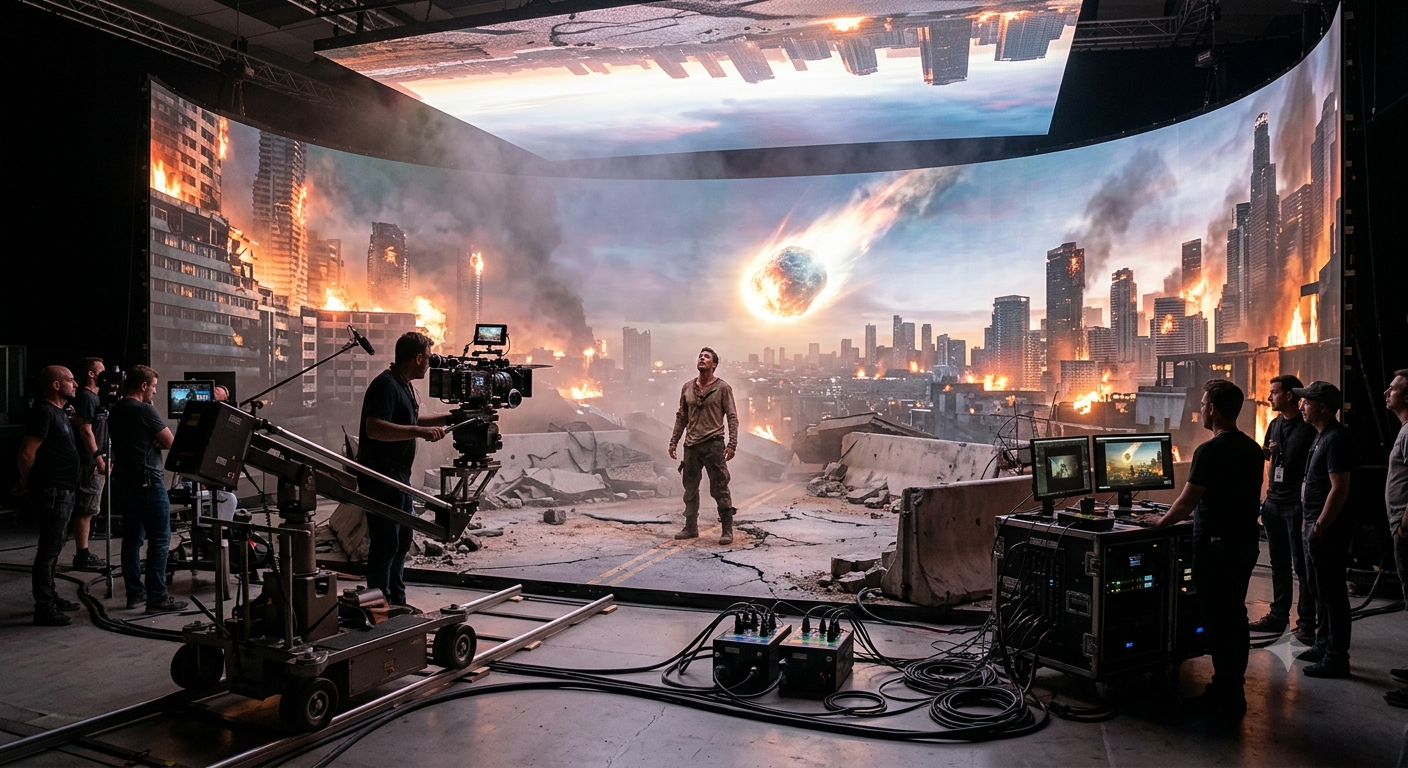
In recent years, a groundbreaking technology originally engineered for the video game industry has begun revolutionizing how disaster scenes are filmed: Virtual Production using LED volumes (popularized by technologies like the StageCraft system).
Instead of positioning actors in an empty studio wrapped in green or blue screens (traditional chroma key) and asking them to imagine a meteor crashing down, productions now build circular stages enclosed by towering, high-resolution LED screens. On these screens, pre-rendered 3D apocalyptic backdrops move in real time, perfectly synchronized with the camera lens’s perspective.
This technology offers two revolutionary advantages for filming disasters:
-
Perfect Illumination: LED panels emit real, organic light. If the screen displays a raging forest fire or a digital explosion to the actor’s left, the actor’s face is physically illuminated by an authentic, flickering orange glow, eliminating the artificial look common in older digital compositing.
-
Cast Immersion: Actors can actually see the disaster unfolding around them. This drastically improves the level of performance, resulting in highly accurate emotional reactions of panic, awe, or urgency.
Conclusion: The Art of Destroying to Create
As we have seen, capturing rain, explosions, and catastrophic disasters on film is a true testament to human ingenuity. Far from being a thoughtless exercise in destruction, action and disaster cinema is a rigorous science where every drop of water, every gram of pyrotechnic powder, and every inch of hydraulic tilting is calculated to maximize dramatic impact without putting a single life at risk.
The next time you watch a action-packed blockbuster, take note of the small details: the backlighting making the rain shimmer, the weightlessness of the brick debris bouncing off the ground, or the organic way characters lose their footing. Behind that apocalyptic chaos making you hold your breath lies the silent, brilliant craftsmanship of hundreds of artists and engineers dedicated to keeping the magic of cinematic illusion alive.
Frequently Asked Questions (FAQ)
1. Are actors ever in real danger during massive explosion scenes?
No. Safety is the absolute highest priority on a modern film set. Even though explosions utilize real fire from propane or gasoline, the physical distance between the explosive charge and the actor is mathematically calculated. Furthermore, stunt performers and actors frequently wear clothing treated with an invisible, fire-retardant gel and employ specialized stunt doubles for high-risk sequences.
2. What is movie breakaway glass made of for windows that shatter?
Historically, productions relied on “sugar glass,” cooked from water, sugar, and corn syrup until it hardened. Today, the industry uses brittle plastic resins and synthetic polymers known as brittle plastic. These materials won’t melt under hot studio lights and shatter cleanly into tiny, dull pieces that feature no sharp, cutting edges.
3. Is the sound of rain and explosions caught live on set?
Rarely. Action sets are extraordinarily noisy environments due to the roaring engines of rain cranes, power generators, and industrial wind machines. The audio captured on set is usually entirely unusable. Nearly 100% of the sound effects for rain, footsteps in puddles, thunder, and detonations are created in post-production by Foley artists and sound designers inside isolated audio studios.
4. How long does it take to clean up and reset a set if an explosion or collapse scene goes wrong?
This is a director’s ultimate nightmare, referred to in the industry as “resetting the set.” Depending on the magnitude of the practical destruction, sweeping up foam debris, rebuilding breakaway walls, and reloading pyrotechnic detonators can take anywhere from several hours to an entire day. Because of this, these scenes are exhaustively rehearsed without live effects to guarantee success on the very first take.