
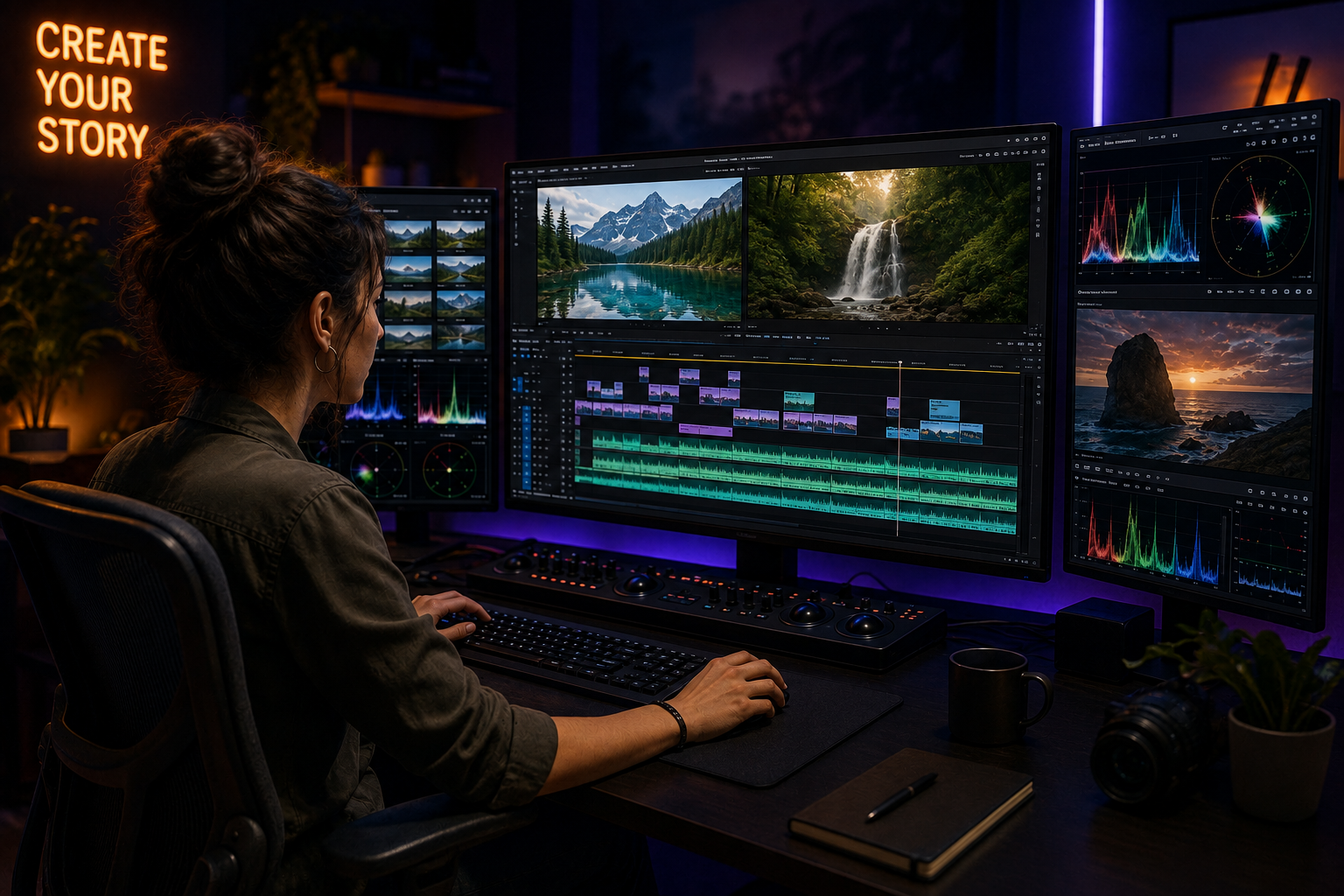
How Movie Trailers Are Made to Make Films Look Unmissable
Have you ever sat in a darkened movie theater, eagerly waiting for the main feature, only to have a two-minute preview leave your heart pounding? Or perhaps you were scrolling through social media when a short video clip made you want to buy a cinema ticket immediately. That overwhelming urge to buy a ticket is not accidental. It is the calculated result of one of the most refined, strategic, and fascinating sectors in entertainment: movie trailer editing.
An exceptional movie trailer is far more than a simple two-hour summary compressed into 120 seconds. It is a standalone piece of narrative art designed to evoke emotion, build urgency, and turn curious viewers into paying audience members.
How do production companies transform random snippets of footage into a hypnotic visual experience? In this article, you will dive behind the scenes of Hollywood to discover the psychology, editing techniques, and sound design secrets behind movie trailers that make any film look unmissable.
Who Actually Makes Movie Trailers? The World of Trailer Houses
Contrary to popular belief, a film’s director and original picture editors rarely edit their own movie trailers. The assembly of promotional material is almost exclusively entrusted to specialized creative advertising agencies known in the industry as trailer houses.
These agencies employ teams of executive producers, specialized editors, sound designers, and copywriters. The reason for this separation is straightforward: a feature film director is often too emotionally attached to the full project to make quick commercial cuts or alter the story’s timeline for maximum sales impact.
Trailer houses receive raw footage—known as dailies or rushes—often months before visual effects (VFX) work is complete. Viewing the material with complete objectivity and a sharp focus on consumer interest, these editors deconstruct the original narrative and rebuild it from the ground up to maximize engagement.
The Dramatic Anatomy: The Three-Act Structure of a Movie Trailer
Just like a full-length feature film, an impactful trailer follows a strict narrative structure. However, because it has roughly two minutes to deliver its message, every single second must serve a precise purpose in the viewer’s emotional journey.
Most modern movie trailers utilize a classic three-act structure tailored for quick impact:
1. Act One: The Hook and World Building (0 to 30 Seconds)
The initial goal is to orient the viewer and establish the tone. The trailer introduces the protagonist, the setting, and the status quo of their world. Within the first ten seconds, the preview implicitly answers three key questions: Who is this character? Where are they? What is the atmosphere of this story?
2. Act Two: The Inciting Incident and Raising the Stakes (30 to 80 Seconds)
Here, the initial harmony is disrupted. The central conflict is introduced: a villain emerges, an impending disaster is revealed, or a romantic dilemma unfolds. Dialogue snippets become shorter, and the visual pacing accelerates to showcase the obstacles the hero must face.
3. Act Three: The Climax and the “Button” (80 to 120+ Seconds)
In the final stretch, the music reaches its dramatic peak and the editing turns frantic. Rapid-fire action shots, explosions, confrontations, and expressive close-ups flash across the screen in quick succession. At the height of the tension, the audio abruptly cuts to silence, revealing the film’s title card and release date.
Frequently, immediately following the title reveal, editors include what the industry calls a button (or button joke): a brief three-second scene that delivers a final joke, jump scare, or memorable line to close the trailer on a high note.
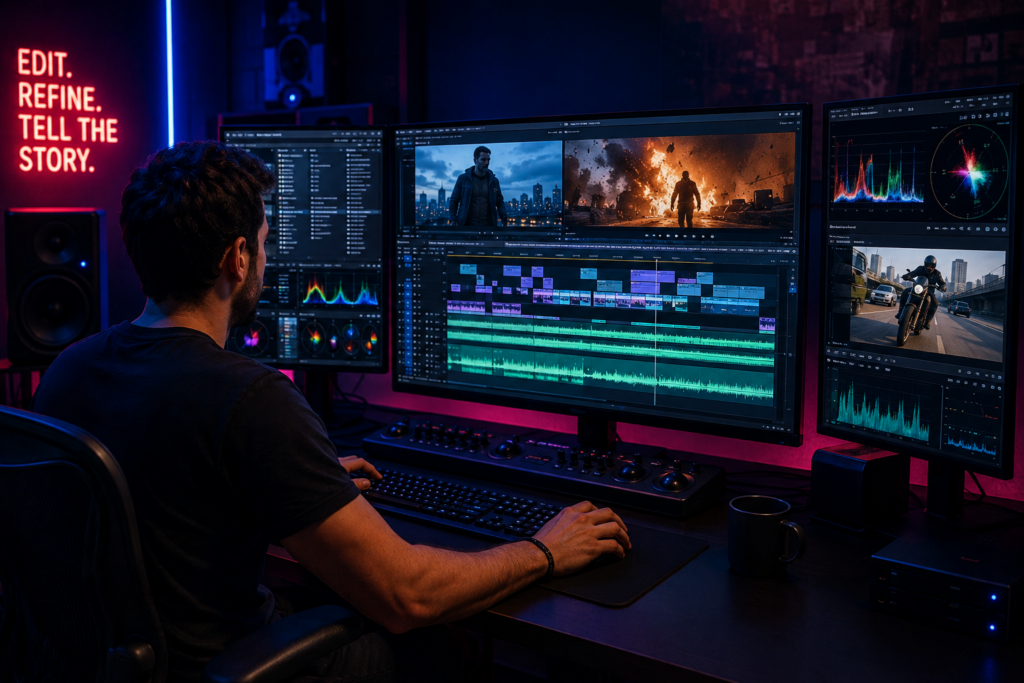
Sound Engineering: The Secret Behind the Goosebumps
If you watch a blockbuster movie trailer on mute, you will notice that more than half of its emotional impact instantly vanishes. Sound design is the true backbone that guides the viewer’s physiological and emotional response.
Trailer sound designers rely on a calculated audio library to manipulate the audience’s heart rate:
-
Stingers and Risers: Audio elements that build tension, swelling in volume until they end in a sharp impact or a sudden drop into silence.
-
Sub-drops (Low-Frequency Impacts): Deep bass frequencies that physically vibrate chest cavities in movie theaters, triggering an involuntary biological state of alertness.
-
The “Bwwam” Effect: Popularized by composer Hans Zimmer in Inception (2010), this cavernous metallic blast has become an industry standard for signaling monumental scale and impending danger in action and sci-fi films.
The “Trailerization” of Famous Songs
Another dominant trend in modern marketing is the trailerization of popular music. Trailer houses hire music producers to create dark, orchestral, or epic covers of classic pop and rock songs. Reinterpreting a familiar track with dramatic strings, heavy percussion, and choral arrangements taps into the audience’s emotional memory while giving the film a fresh, cinematic feel.
Psychology of Attention: The 5-Second Bumper and the Engagement Economy
In the era of social media and streaming platforms, consumer behavior has shifted dramatically. With the ability to click “Skip Ad” on YouTube after five seconds, marketing agencies had to rethink the traditional trailer structure.
This shift gave birth to the bumper (or micro-teaser). A bumper is a hyper-edited three-to-five-second clip placed at the very beginning of an online trailer, essentially serving as a “trailer for the trailer.”
The psychological goal is simple: capture immediate brain attention, leverage the curiosity gap, and prevent the user from scrolling away before the main preview begins.
The Magic of Editing: Pacing, Narrative Manipulation, and Red Herrings
Editing a movie trailer is rarely about reflecting chronological order. Skilled editors employ a technique known as cutting on the beat, syncing character eye blinks, gunshots, or punches precisely to the rhythm of the musical score.
Furthermore, editors use visual manipulation techniques to protect key plot secrets while building excitement:
-
Disconnected Audio Overlay: Dialogue spoken by a character in the trailer often comes from a completely different scene than the visual footage shown on screen.
-
Red Herrings: Careful editing can imply that two characters are speaking to each other in the same room when, in the actual movie, they never meet or exist in different timelines.
-
Digital Spoiler Removal: Studios often use visual effects to digitally remove characters, alter prop details, or change backgrounds in trailer frames to prevent major plot twists from leaking early.
Promising vs. Delivering: The Pitfall of Misleading Trailers
Despite its technical sophistication, the trailer industry faces a constant ethical dilemma: the fine line between generating genuine hype and misleading the consumer.
When a trailer packs every joke or action sequence into two minutes, audience members may leave the theater feeling disappointed by the actual film. Similarly, highlighting a famous actor in promotional materials when they only have a brief cameo in the final cut can trigger viewer backlash and negative online reviews.
The top trailer houses recognize that the ideal trailer does not spoil the entire plot. Instead, it promises a specific emotional experience that the movie can genuinely deliver.
Movie Trailers Are Made- Conclusion
Creating a movie trailer is a fascinating blend of artistry, behavioral psychology, and high-precision marketing. Far from a random montage of scenes, every preview is built from the ground up to trigger primary human emotions: fear, wonder, laughter, or nostalgia.
From the strategic placement of deep sub-drops to the precise pacing of visual cuts, those two minutes represent the primary bridge between a filmmaker’s vision and the audience’s desire for entertainment. The next time a movie trailer gives you goosebumps and makes you mark your calendar, remember: you have just experienced one of the most refined visual persuasion techniques in modern cinema.
Frequently Asked Questions (FAQ)
How much does it cost to produce a major Hollywood movie trailer?
The budget for a blockbuster trailer campaign typically ranges from $100,000 to over $1 million. This cost covers the trailer house’s editorial work, music licensing rights, custom sound design, and motion graphics creation for title cards.
Why do some movie trailers feature scenes that aren’t in the final film?
Trailers are edited while the feature film is still in post-production. During the final assembly of the movie the director may cut scenes for pacing or runtime reasons, even if those scenes were already included in promotional trailers released months earlier.
What is a “Trailer House”?
A trailer house is a creative marketing agency that specializes in producing trailers, teasers, TV spots, and digital video assets for the entertainment industry. Major film studios often hire multiple trailer houses simultaneously to compete for the best final edit.
What is the difference between a Teaser and an Official Trailer?
A teaser is released early in the marketing campaign (often 6 to 12 months before premiere), runs short (45 to 90 seconds), and focuses on building mystery without revealing key plot details. An official trailer is longer (around 2 to 2.5 minutes) and clearly outlines the characters, central conflict, and narrative arc.